Hiring speed used to be treated as an operational detail, something recruiters optimized only after the “real” decisions had already been made. It lived in dashboards, process reviews, and HR metrics, largely disconnected from broader business strategy. But in today’s talent market, speed is no longer a back-office concern. Faster hiring has become a competitive advantage, directly influencing how quickly organizations execute strategy, capture opportunity, and respond to change.
Companies that recognize this reality gain a faster hiring competitive advantage. They fill critical roles before momentum is lost, engage candidates while interest is high, and keep teams moving without prolonged gaps. Those that don’t experience the opposite every day: roles sitting open longer than planned, candidates going quiet mid-process, managers stretching teams to cover missing capacity, and growth slowing down for reasons that are difficult to diagnose but impossible to ignore.
The shift is driven by one simple truth: hiring no longer happens in a stable environment. Talent markets move quickly, candidate expectations evolve in real time, and the most in-demand professionals rarely wait for slow, uncertain processes to catch up. In this context, slow hiring is no longer a sign of caution or rigor. It’s a source of friction, lost opportunity, and competitive disadvantage.
Speed, when paired with clarity and intelligence, doesn’t weaken hiring decisions. It strengthens them.
The Cost of Slow Hiring Decisions
Slow hiring doesn’t fail loudly or dramatically. It fails quietly, through small delays that accumulate into meaningful business drag. Because the damage unfolds over time, it’s often misattributed to market conditions, team performance, or execution issues, when in reality, the root cause sits upstream in hiring decisions that took too long to make.
What makes slow hiring especially dangerous is that its impact is rarely captured in a single metric. Instead, it reveals itself across the organization in subtle but persistent ways.
Impact of Hiring Delays on Business Growth
When a role stays open, the work attached to it doesn’t pause. It gets redistributed. Teams stretch to absorb extra responsibility. Managers step in to cover gaps. Priorities are reshuffled to compensate for missing capacity.
In the short term, this looks like resilience. In the long term, it becomes a growth constraint. Strategic initiatives move more slowly. Execution quality suffers. Teams spend more time maintaining momentum than building it. Growth slows, not because the strategy was wrong, but because the organization lacked the capacity to execute it at the right moment.
The impact of hiring delays on business is rarely isolated to HR. It shows up in missed deadlines, delayed product launches, longer sales cycles, and teams operating in a constant state of overload. Over time, this strain leads to burnout, attrition, and even more open roles, creating a compounding problem that’s hard to reverse.
Candidate Drop-Off and Lost Talent
While internal teams are compensating, candidates are making decisions. And top candidates don’t wait.
As hiring processes drag on, communication slows, and momentum fades. Candidates begin to question priorities, clarity, and commitment. Even strong early engagement can disappear if follow-ups take too long or decisions feel uncertain.
By the time an offer is finally extended, the candidate has often already moved on, or worse, accepted a role with a faster-moving competitor. Slow hiring doesn’t just lose talent passively. It actively redirects it to organizations that demonstrate decisiveness and respect for candidate time.
The Hidden Opportunity Cost of Slow Decisions
Beyond visible losses lies a deeper cost that rarely appears in hiring reports. Every delayed hire represents work not done, revenue not generated, and problems left unresolved longer than necessary. Data shows that many delays stem from unclear screening signals and manual decision overrides earlier in the hiring funnel.
A sales role filled two months late means two months without pipeline growth. A product hire delay means features are shipped later than planned. A support role left open means customer experience deteriorates quietly in the background.
These opportunity costs don’t appear on dashboards, but they surface clearly in business outcomes. When organizations struggle to explain why growth feels harder than it should, slow hiring is often part of the answer, even if it’s not immediately obvious.
Why Hiring Speed Has Been Framed Incorrectly
Despite mounting evidence that slow hiring hurts outcomes, hiring speed is still widely misunderstood. In many organizations, it’s treated as a secondary concern, something to optimize only after every other variable has been accounted for. This framing misses the real issue. Speed isn’t just about process efficiency; it’s about decision effectiveness.
The way hiring speed has historically been measured and discussed has shaped culture, behavior, and expectations in ways that actively slow teams down.
Speed as an Efficiency Metric
Traditionally, hiring speed has been framed through operational metrics like time-to-fill, days-to-hire, and pipeline velocity. These numbers are useful. They help teams identify bottlenecks and improve process flow. But on their own, they tell only part of the story.
When speed is viewed purely as an efficiency metric, it’s easy to assume that moving faster must mean cutting corners. That assumption has influenced hiring culture for years. Leaders become cautious. Processes expand. Additional interviews and approval steps are added in the name of rigor, even when they don’t meaningfully improve decision quality.
As a result, speed becomes something to apologize for instead of something to design for.
The Myth of “More Time Equals Better Decisions”
One of the most persistent beliefs in hiring is that more time leads to better decisions. The logic seems reasonable: more interviews should mean more data, and more data should mean better judgment.
In practice, the opposite often happens. As timelines stretch, feedback becomes fragmented. Interviewers focus on minor discrepancies instead of core signals. Early clarity gives way to second-guessing. What began as strong alignment slowly erodes under the weight of too many opinions and too little synthesis.
Extended timelines rarely add insight. More often, they dilute it.
Organizational Drag in Hiring Processes
Much of slow hiring isn’t intentional; it’s structural. Decisions move slowly because responsibility is spread thinly across teams. Approvals stack up. Feedback loops multiply. Systems don’t talk to each other, and context gets lost along the way.
Each step feels reasonable in isolation. Together, they create drag. What looks like thoroughness from the inside often feels like indecision from the outside, especially to candidates.
This kind of organizational drag doesn’t make hiring safer. It makes it slower, noisier, and harder to execute with confidence.
Hiring Speed vs Quality: A False Trade-Off
The perceived trade-off between hiring speed and quality is largely false. Faster hiring improves outcomes when decisions are driven by clarity, confidence, and high-quality signals, not shortcuts or guesswork.
For years, hiring speed and hiring quality have been positioned as opposing forces. Move too fast, and you risk making a bad hire. Move too slowly, and you’re being “careful.” This framing has shaped hiring culture, tooling, and leadership expectations, but it’s fundamentally flawed.
The real determinant of hiring quality is not time. It’s decision intelligence. Speed improves hiring outcomes when it is driven by better signals and clearer decisions, not by rushing or cutting evaluation short.
Why Slow Hiring Doesn’t Improve Outcomes
Slow hiring is often mistaken for rigorous hiring. In practice, extending timelines rarely adds meaningful insight. Instead, it introduces friction. As interviews stretch across weeks, feedback becomes fragmented. Different interviewers anchor on different concerns. Early signals lose their weight, and clarity erodes.
Strong candidates who initially felt like obvious fits begin to be questioned, not because new evidence emerged, but because uncertainty crept in. What started as confidence gradually turns into hesitation. In many cases, quality doesn’t improve with time; it deteriorates.
This is the hidden failure mode of slow hiring: it replaces informed judgment with second-guessing.
Decision Fatigue and Compromise Hires
As roles remain open, pressure builds. Teams feel the operational strain of missing capacity. Managers absorb extra work. Recruiters run yet another interview loop, hoping for certainty that never quite arrives.
Eventually, the decision question shifts. It’s no longer “Is this the right hire?” It becomes “Can we move forward?” That shift is subtle, but dangerous.
This is how compromise hires happen. Not because teams moved too fast, but because they waited too long and lost the ability to decide with conviction.
How Fast Teams Make Better Decisions
High-performing teams don’t rush. They decide decisively.
They move faster because they know exactly what they’re looking for. They recognize strong signals early. They don’t confuse additional opinions with additional insight. Speed, in these teams, is not a goal; it’s a byproduct of clarity.
Fast hiring is not about compressing timelines arbitrarily. It’s about eliminating unnecessary uncertainty.
How Fast Hiring Teams Actually Operate
Organizations that consistently hire quickly don’t rely on urgency or pressure. They rely on structure, alignment, and intelligence.
Clear Prioritization of Candidate Signals
Fast teams are ruthless about signal prioritization. They separate what is critical from what is merely nice to have. Role-impacting skills, demonstrated capability, and relevant experience matter more than surface-level perfection.
By focusing on the signals that truly predict success, these teams can make confident decisions earlier, without needing endless validation.
Fewer Approval Loops
Speed improves when ownership is clear. Fast hiring teams avoid consensus-driven paralysis by assigning accountable decision-makers. Feedback informs decisions, but it doesn’t stall them.
Instead of routing candidates through endless approval loops, these teams design hiring processes where responsibility is explicit, and decisions are respected.
Confidence-Driven Decisions
Confidence doesn’t come from instinct alone. It comes from good information. When teams trust the quality of the signals in front of them, they don’t need more time; they need alignment.
This is the point where systems begin to matter.
The Role of Intelligence in Faster Hiring
Speed without intelligence is reckless. Intelligence without speed is ineffective. Modern hiring requires both working together as a hiring intelligence layer plays a central role in accelerating decisions without sacrificing quality..
Reducing Screening Noise
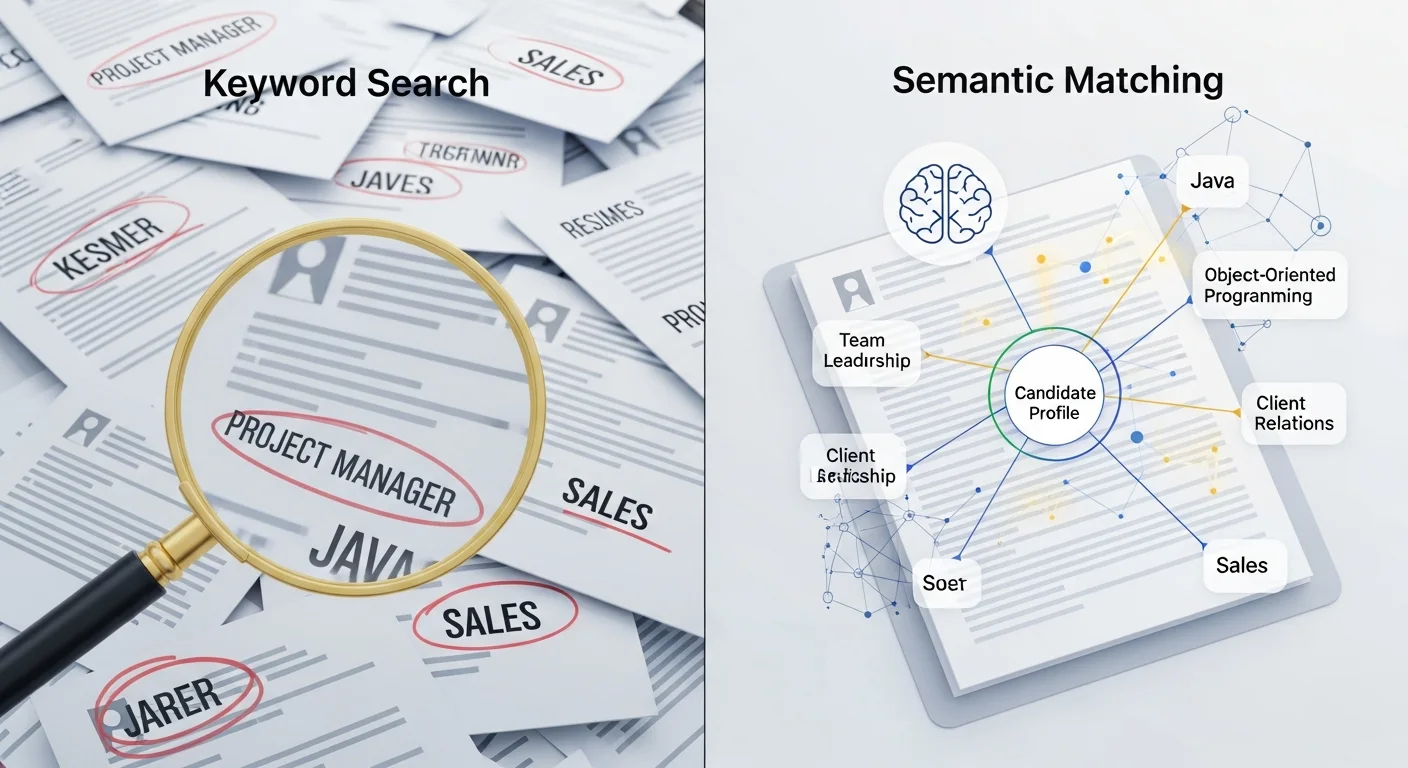
One of the biggest barriers to fast hiring is noise: too many resumes, too little clarity. When recruiters are forced to manually sift through volume, timelines stretch, and decisions slow down. Intelligence layers reduce hiring delays by improving decision clarity, not by accelerating process steps.
Decision intelligence cuts through the noise. It finds candidates who are truly relevant, not just those with matching keywords. When the quality of signals improves, speed naturally increases.
Enabling Quicker Shortlisting
Strong shortlists accelerate everything downstream. When candidates are surfaced based on context and relevance, hiring managers spend less time questioning the list and more time engaging with candidates.
Fewer debates. Fewer delays. More forward motion.
Supporting Decisive Recruiters and Managers
Intelligence doesn’t replace human judgment; it strengthens it. When recruiters and hiring managers have access to clear, explainable insights, they’re more willing to move forward with confidence.
This is how intelligence enables speed without sacrificing quality.
Why Faster Hiring Is a Competitive Advantage
In modern talent markets, speed is not neutral. It’s directional.
Talent Markets Reward Speed
The best candidates rarely stay available for long. They gravitate toward organizations that move with clarity and intent. Fast hiring signals decisiveness, alignment, and respect for candidate time, all of which are highly attractive to high-performing talent.
Slow hiring, by contrast, signals uncertainty, even when intentions are good.
Hiring Velocity as a Strategic Moat
Over time, faster hiring compounds into a structural advantage. Teams fill roles sooner, execute faster, and adapt more quickly to change. Competitors trapped in slow decision cycles struggle to keep pace, no matter how strong their brand or compensation.
Hiring velocity becomes a moat, one that’s difficult to replicate without changing how decisions are made.
Faster Hiring Supported by Intelligence Layers
Speed at scale doesn’t come from pressure or heroics. It comes from better systems, specifically, systems designed to support decisions, not just processes.
This is where intelligence begins to matter. Faster hiring doesn’t come from pressure or shortcuts; it comes from seeing clearly earlier in the process.
How AICRUIT Enables Faster, Smarter Hiring
AICRUIT is designed to remove friction from hiring decisions, not by pushing teams to rush, but by helping them see clearly sooner.
By combining AI-powered screening, interview intelligence, and contextual evaluation, AICRUIT reduces screening noise and accelerates shortlisting. Recruiters no longer have to dig through volume. Hiring managers no longer have to second-guess recommendations.
Instead of slowing decisions down with more steps, AICRUIT strengthens decisions by improving signal quality. Teams move faster because they trust what they’re seeing.
Crucially, AICRUIT works alongside existing ATS platforms. Organizations don’t need to rebuild their hiring stack. They simply upgrade the intelligence layer that sits on top, turning hiring speed from a risk into a competitive advantage.
Conclusion: Fast Hiring Is Intelligent Hiring
Hiring isn’t slow because teams are careless. It’s slow because systems weren’t built for decision-making.
Keyword filters, fragmented workflows, and excessive approvals create friction that looks like caution but behaves like drag. In contrast, fast hiring emerges when clarity, confidence, and intelligence align.
Keyword matching helped organizations manage volume. Intelligence-driven hiring helps them compete.
The future belongs to companies that can decide well and quickly.
FAQs
Q: Why is faster hiring a competitive advantage?
Faster hiring allows organizations to secure top talent before competitors, reduce productivity gaps, and maintain momentum in fast-moving markets.
Q: What is the cost of slow hiring?
The cost of slow hiring includes lost candidates, delayed growth, increased team strain, and missed business opportunities.
Q: Does faster hiring reduce quality?
No. When driven by clear signals and intelligence, faster hiring often improves quality by reducing decision fatigue and compromise.
Q: How can companies hire faster without cutting corners?
By reducing screening noise, clarifying decision ownership, and using intelligence-driven hiring systems that surface relevant candidates earlier.
Q: How does AICRUIT help with hiring speed?
AICRUIT accelerates hiring by improving signal quality through AI-powered screening and interview intelligence, enabling faster and more confident decisions.
Q: Why do companies confuse slow hiring with careful hiring?
Because traditional hiring systems equate more steps with more rigor, even when those steps don’t improve decision quality or outcomes.





.webp)