For decades, resume screening has been viewed as a straightforward initial step in the hiring process. A quick scan. A basic filter. A way to reduce volume before “real” evaluation begins. But when you look closely at how resumes are actually screened today, by both humans and machines, you start to see something deeper.
Resume screening isn’t just filtering. It’s where many hiring decisions are implicitly made.
When analyzed at scale, AI resume screening insights consistently reveal three patterns: how screening decisions are really made, where bias enters the process, and why qualified candidates are often filtered out before human review. What AI reveals isn’t that recruiters are careless; it’s that the systems they rely on were never designed to interpret people accurately.
How Recruiters Screen Resumes Today
To understand what AI reveals about hiring decisions, we first need to look at how resume screening actually works in practice, not how it’s described in process documents or career pages.
In reality, resume screening is shaped by volume, tooling constraints, and time pressure. What starts as an objective system quickly becomes a series of trade-offs.
ATS-Driven Resume Screening Workflows
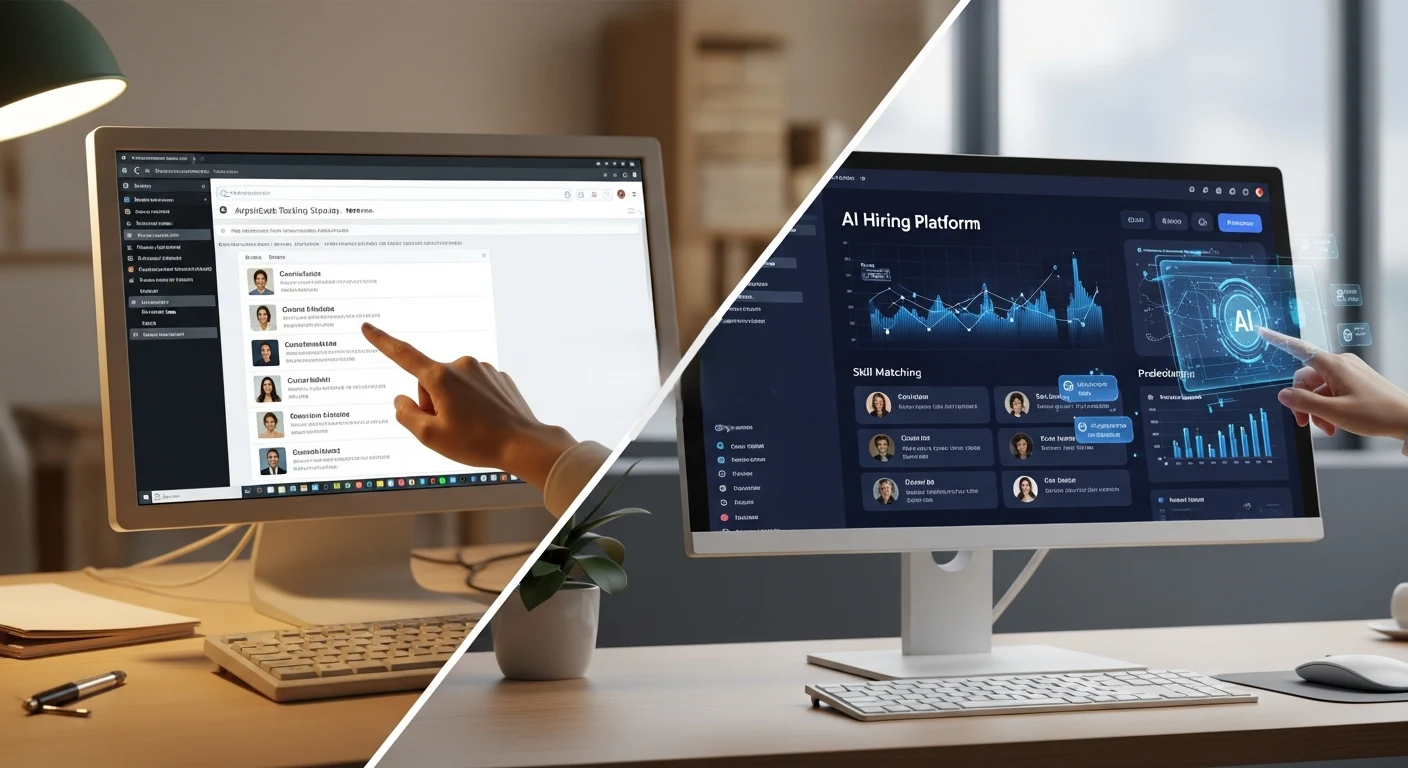
In most organizations, resume screening begins and often ends inside an Applicant Tracking System. When a candidate applies, their resume is parsed into structured fields: job titles, skills, companies, education, and dates. These fields are then indexed so recruiters can filter, rank, or search resumes at scale.
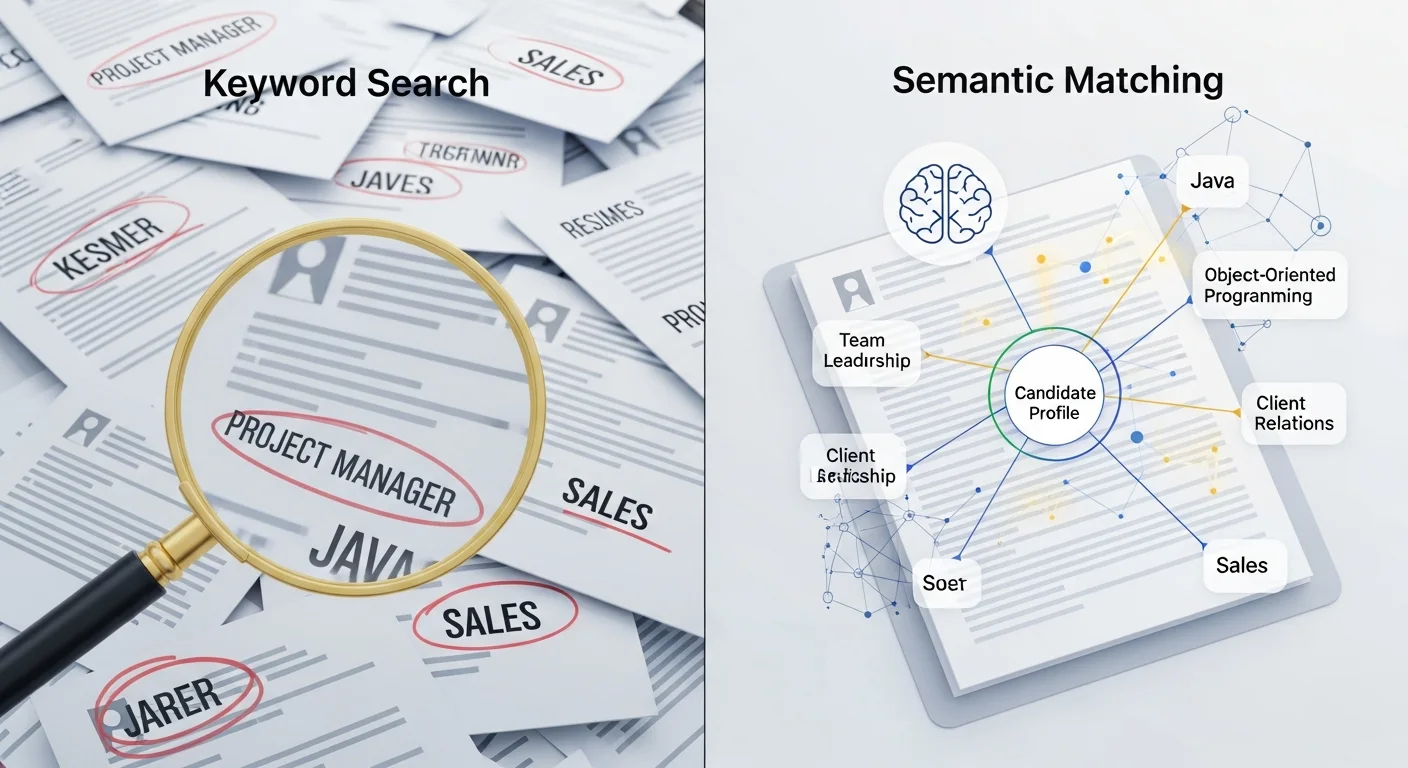
On paper, this keyword-based screening looks fair and consistent. In practice, it’s highly mechanical. The ATS decides which resumes are even visible long before a recruiter reviews them. If a resume doesn’t align with predefined logic, missing keywords, unfamiliar titles, or non-standard experience, it simply never surfaces.
Research and industry analysis from sources like Harvard Business Review and LinkedIn Talent Solutions have repeatedly highlighted this issue: automation reduces workload, but it also narrows the candidate pool in ways recruiters don’t always see. The ATS becomes the gatekeeper not because recruiters trust it blindly, but because application volume leaves little alternative.
For example, a recruiter hiring for a “Data Analyst” role may never see a strong candidate with a “Business Intelligence Specialist” title, even if the work is nearly identical, because the system filtered them out upstream.
Manual Overrides and Recruiter Intuition
Experienced recruiters know these systems aren’t perfect. That’s why manual overrides exist. When a resume feels promising despite a low match score, recruiters dig deeper, re-check rejected candidates, or rely on intuition to move someone forward.
This happens more often than most organizations admit.
For example, a recruiter may notice a candidate with fewer keywords but strong progression at reputable companies and decide to override the system’s recommendation. Over time, these overrides become routine.
This creates a quiet contradiction. Recruiters are expected to trust automated screening, yet they regularly correct it. Research on recruiter behavior shows that this constant switching between system logic and human judgment increases cognitive load, slows decisions, and contributes to burnout. The system is supposed to save time, but instead it creates extra mental work.
These overrides aren’t exceptions; they are signals. When captured and learned from, they become the foundation of hiring intelligence rather than a workaround for broken systems.
The Limits of Traditional Resume Screening
Traditional resume screening struggles because resumes are static documents representing dynamic careers. A resume compresses years of learning, growth, and context into one or two pages, while systems treat those pages as checklists.
A career break looks like a gap. A lateral move looks like stagnation. A title change looks like misalignment.
The result is a surface-level evaluation that favors familiarity over fit. Candidates who look “right” on paper move forward, while those who could perform just as well or better are filtered out early.
Why Resume Screening Has Always Been Misunderstood
Resume screening is often framed as a simple administrative task. In reality, it’s one of the most consequential stages in hiring.
Screening as a Filtering Task vs a Decision Task
Most hiring systems treat screening as filtering: remove the unqualified and pass the rest forward. But in practice, screening determines which possibilities even exist.
Once a candidate is screened out, they’re rarely reconsidered. There is no interview to correct the mistake. No discussion to add context. That makes screening a decision point, not a clerical step.
Research in organizational psychology consistently shows that early-stage decisions have an outsized impact on outcomes. In hiring, resume screening quietly shapes the entire funnel.
Why Recruiters Rely on Imperfect Signals
Recruiters rely on imperfect signals because better ones are rarely available at scale. Titles, company names, keywords, and tenure become proxies for capability, not because they’re accurate, but because they’re fast.
This isn’t a failure of recruiter judgment. It’s a constraint imposed by tools and time.
When a recruiter has hundreds of resumes to review, they need signals that can be evaluated quickly. The system rewards what’s easy to scan, not what’s most predictive.
How ATS Logic Shaped Hiring Behavior
Over time, ATS logic doesn’t just filter candidates, it shapes how recruiters think. Recruiters learn which resumes “work” in the system and unconsciously align their expectations with those patterns.
If candidates from certain backgrounds consistently surface, those backgrounds begin to feel like the “right” ones. If others rarely appear, they’re subconsciously treated as riskier even when evidence suggests otherwise.
The system trains humans, not the other way around.
How AI Resume Screening Interprets Candidate Data
AI resume screening analyzes candidate data using pattern recognition and contextual evaluation to assess relevance, rather than relying solely on keyword matching or rigid filters.
AI doesn’t read resumes the way humans do, but it also doesn’t read them the way ATS systems do. Instead of asking whether a resume matches predefined criteria, AI looks for patterns that indicate capability, relevance, and potential.
Skill Pattern Recognition vs Keyword Matching
Where keyword-based systems count words, AI looks for patterns across a career.
For example, instead of searching for the word “leadership,” AI can identify leadership through responsibility progression, team size, scope of decisions, and repeated ownership of outcomes. A candidate may never use the word “leader,” yet consistently demonstrate leadership through their roles.
This mirrors how experienced recruiters think, but applies it consistently at scale.
Contextual Evaluation of Experience
AI evaluates experience in context. A “Product Manager” at a 20-person startup and a “Product Manager” at a global enterprise may share a title but perform very different work.
AI systems can detect these differences by analyzing role descriptions, responsibilities, outcomes, and progression. This contextual evaluation allows systems to distinguish between superficial similarity and real alignment, something traditional screening can’t do.
AI vs Human Resume Screening Logic
Humans excel at nuance and intuition, but struggle with consistency, especially under volume and time pressure. AI excels at consistency and pattern recognition, but lacks judgment without guidance.
The difference is not AI versus humans, but consistency versus capacity; AI scales pattern recognition, while humans provide contextual judgment and final accountability.
Identifying Transferable Capabilities
One of the most powerful insights from AI screening is the identification of transferable skills. Candidates moving between industries or functions are often filtered out by traditional systems because their titles don’t align.
AI can recognize that underlying capabilities, problem-solving, stakeholder management, and systems thinking apply across roles, even when labels differ. This opens the door to talent that would otherwise remain invisible.
Key Insights From AI-Screened Resume Data
When organizations analyze AI-screened resume data over time, patterns emerge that are difficult to see through manual review alone. These insights don’t just explain how candidates are selected; they reveal why hiring decisions tend to skew in certain directions and where traditional systems quietly fail.
What’s most striking is not how often AI disagrees with recruiters, but how often it confirms their instincts while also exposing blind spots created by process, scale, and bias.
Where AI and Recruiters Agree
In a large majority of cases, AI and experienced recruiters converge on the same top candidates. Profiles with clear career progression, relevant experience, and demonstrated outcomes consistently rise to the top across both human and AI evaluation.
This alignment matters. It shows that AI isn’t introducing a foreign logic into hiring. Instead, it’s codifying patterns that strong recruiters already recognize, just applying them consistently and at scale.
This reinforces a critical point: AI is not replacing recruiter judgment, it’s validating and amplifying it. The system surfaces what good recruiters already value, without fatigue or inconsistency.
Where Recruiters Override AI Recommendations
Overrides tend to occur where context matters deeply. Career breaks, unconventional paths, lateral moves, or industry transitions are common examples. In these cases, human judgment adds nuance that data alone may not fully capture.
For example, a candidate returning after a caregiving break may appear less competitive on paper, yet a recruiter recognizes resilience, updated skills, or strong prior performance. These moments are not failures of AI; they are proof that human oversight remains essential.
What’s important is what happens next.
When systems are designed to learn from these overrides, AI improves over time. It begins to recognize patterns associated with successful non-linear careers instead of treating them as anomalies. In poorly designed systems, overrides are ignored. In intelligence-led systems, they become training signals that refine future decisions. This is the difference between static automation and adaptive intelligence.
Resume Sections That Influence Decisions Most
AI-screened data consistently shows that some resume sections matter far more than others, often contradicting common resume advice.
Experience depth, role progression, and demonstrated outcomes have the strongest influence on screening decisions. Formatting, summaries, and keyword density matter far less than candidates expect.
This insight challenges years of “ATS-optimized” resume best practices that encouraged keyword stuffing and cosmetic tweaks over substance. AI doesn’t reward how well a resume is optimized. It rewards what the resume actually shows.
What AI Resume Screening Insights Reveal About Bias
Automation doesn’t eliminate bias, but it changes how bias enters the system. AI makes bias more visible, measurable, and correctable.
Resume Screening Bias in Rule-Based Systems
Rule-based systems amplify bias by enforcing rigid criteria. Candidates from non-traditional backgrounds, career switchers, self-taught professionals, or those with unconventional titles are disproportionately filtered out because they don’t fit predefined molds. This bias is rarely intentional. It’s structural.
The system enforces sameness because sameness is easy to define.
Where Human Inconsistency Appears
Human bias often appears through inconsistency rather than intent. Two recruiters may interpret the same resume differently depending on workload, urgency, or personal experience.
On Monday, a resume looks promising. On Friday afternoon, it’s overlooked.
AI exposes this variability by providing a stable reference point. When recruiters see where their decisions diverge from consistent patterns, bias becomes something that can be discussed and improved, not ignored.
How AI Improves Consistency Without Removing Control
When designed correctly, AI improves consistency while leaving final decisions firmly in human hands. Recruiters gain clearer baselines, more transparency, and better explanations for why candidates are surfaced or filtered. Control isn’t removed. It’s reinforced with evidence.
This is where intelligence differs from automation.
What This Means for Modern Hiring Systems
These insights point to the same conclusion: Modern systems require an hiring intelligence layer that sits above traditional ATS workflows and supports real hiring decisions.
Why ATS Misses Qualified Candidates
ATS platforms miss qualified candidates because they rely on static rules to evaluate dynamic careers. They optimize for visibility and similarity, not relevance and potential.
This is why strong candidates disappear before a human ever sees them, not because they’re unqualified, but because they don’t match rigid logic.
The Role of Intelligence Layers in Screening
An intelligence layer sits above the ATS, interpreting resumes with context and meaning. It doesn’t replace infrastructure; it enhances it.
Improving Hiring Decisions With Better Interpretation
Modern hiring systems apply AI-powered screening and interview intelligence to surface explainable insights, not black-box scores. Recruiters don’t just see that a candidate ranks highly; they see why.
This allows organizations to keep their ATS while upgrading how screening decisions are actually made.
How AICRUIT Uses AI Resume Screening Insights in Practice
AICRUIT treats resume screening as the first real decision point, not a mechanical filter.
By combining semantic evaluation, pattern recognition, and contextual insights, AICRUIT helps recruiters understand candidate potential beyond keywords. Screening becomes clearer. Shortlists become stronger. Decisions become faster.
Most importantly, AICRUIT supports human judgment instead of replacing it.
Decisions remain human. Insight becomes intelligent.
Conclusion: Better Screening Leads to Better Hiring Decisions
Resume screening has always shaped hiring outcomes, whether organizations acknowledged it or not. What AI resume screening insights reveal is that most hiring failures don’t start in interviews. They start much earlier, when candidates are filtered out silently and permanently.
Better screening leads to better shortlists.
Better shortlists lead to better decisions.
Better decisions lead to stronger teams.
The future of hiring belongs to systems that understand people, not just resumes. AICRUIT exists to make that future practical, scalable, and fair.
See how AICRUIT brings intelligence to resume screening and hiring decisions. These insights point to a broader shift: resume screening is no longer a filtering task; it’s a decision process.
FAQs
Q: What are AI resume screening insights?
AI resume screening insights reveal how candidate relevance, skills, and experience patterns influence hiring decisions beyond keyword matching.
Q: How do recruiters screen resumes today?
Most recruiters rely on ATS-driven filters combined with manual review and intuition, often correcting system limitations manually.
Q: Is AI resume screening biased?
AI can reduce certain biases by improving consistency, but it must be designed with transparency and human oversight.
Q: How is AI different from human resume screening?
AI excels at pattern recognition and consistency at scale, while humans provide contextual judgment and final decision-making.
Q: How does AICRUIT improve resume screening?
AICRUIT adds an intelligence layer that interprets resumes contextually, reduces screening noise, and supports better hiring decisions.

.webp)