Hiring costs are rarely questioned when roles are filled on time. The conversation changes when hiring slows, budgets tighten, or growth plans stall. When you sit down to evaluate your budget, the first thing your CFO asks for is the latest set of cost-per-hire benchmarks to see how your talent acquisition team stacks up against the market average. It is a reasonable request, yet it is often the start of a deeply flawed conversation. Leaders look for comparisons, averages, and industry numbers to explain why hiring feels more expensive than expected.
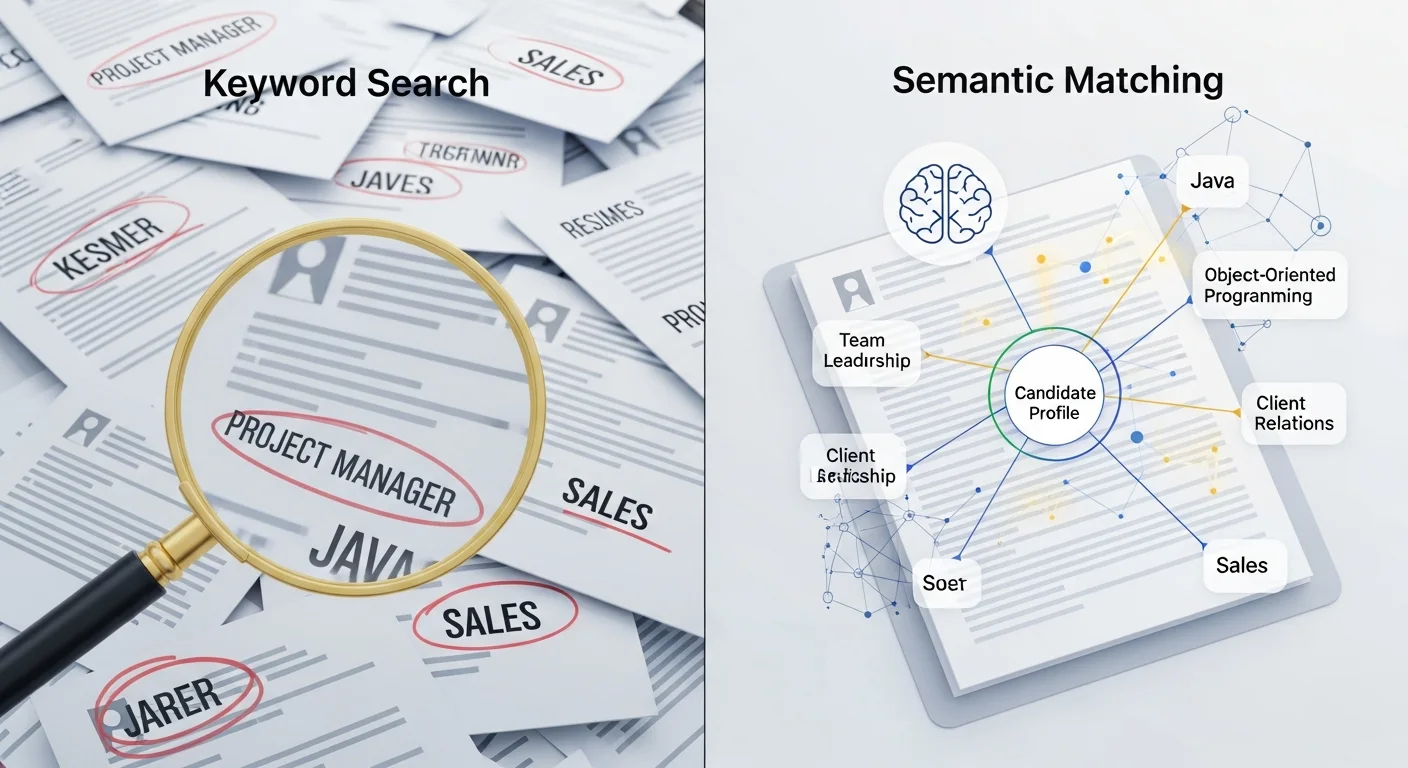
In the world of recruitment, we treat benchmarks with a similar, dangerous simplicity. We look at a report telling us that the average cost to bring a new employee on board is roughly $4,700, and we either celebrate being under that number or panic if we are over it. But what does that number actually represent? Does it include the forty hours your engineering manager spent interviewing fundamentally unqualified candidates? Does it account for the revenue lost because a critical sales role sat vacant for three months? The truth is that most traditional benchmarks are a rearview mirror view of a very messy process. They often ignore the radical difference between a manual, labor-intensive process and one powered by intelligent automation.
The problem is not the metric itself. The problem is how it is used. Comparing averages across companies, industries, or years hides the decisions that actually drive cost. What reveals real ROI is not a static number, but a comparison of how hiring costs behave before and after meaningful change.
This is why scenario-based benchmarking matters. It exposes what actually moves cost, rather than what merely looks impressive in reports. This guide promises to move past the surface-level "sticker price" of hiring. We are going to prove that the only way to validate your ROI is to stop looking at industry averages and start looking at "Before vs. After" scenarios within your own walls. We will look at how the shift from human-heavy screening to AI-driven precision fundamentally alters the math of recruitment. By the end of this playbook, you will have a clear framework for quantifying the hiring cost reduction metrics that actually matter to your executive stakeholders, ensuring that your talent strategy is viewed as a value-driver rather than a line-item expense.
Cost-per-hire benchmarks are comparative reference points used to evaluate how hiring costs behave over time, across roles, or before and after operational change. When used correctly, they reveal trends in efficiency and decision quality, not just average spending. In modern recruiting, these benchmarks are evolving to include "hidden" labor costs and the "before and after" impact of AI automation on recruiter productivity.
Why Cost-Per-Hire Benchmarks Are Often Misleading
Cost-per-hire is one of the most cited recruiting metrics, yet it is also one of the most misinterpreted. Industry benchmarks promise objectivity, but they rarely account for scale, hiring mix, or decision quality. A low cost-per-hire can coexist with slow hiring, high burnout, or repeated searches. A high cost-per-hire may reflect investment rather than inefficiency.
The danger lies in comparing averages without context. Traditional recruiting cost benchmarks flatten complexity into a single number, stripping away the operational reality behind it. Two companies may report the same cost-per-hire while experiencing completely different levels of strain, speed, and risk.
This is why before-and-after comparisons are more revealing than peer averages. They show how cost changes when decision-making improves, volume increases, or inefficiencies are removed. ROI becomes visible not as a claim, but as a pattern.
What Cost-Per-Hire Actually Includes
Cost-per-hire is often treated as a simple calculation, but in practice, it is a composite of many moving parts. To understand why your current metrics might be lying to you, we first have to deconstruct what actually goes into the "cost" of a hire. Most organizations divide these into fixed and variable costs. Fixed costs are things like your Applicant Tracking System (ATS) subscription or your internal recruiter salaries. These are the easy numbers to find on a spreadsheet. Variable costs are the more elusive ones, such as job board spend, background check fees, and recruitment agency commissions, and these costs fluctuate based on volume, urgency, and decision quality. However, even this division misses the largest and most volatile component of the entire equation: screening labor.
Screening Labor
Screening labor is one of the largest and least visible contributors that traditional recruiting cost benchmarks often fail to capture accurately. Recruiter hours spent reviewing resumes, revisiting decisions, and rebuilding shortlists accumulate quietly. Every hour a recruiter spends opening a PDF, scanning for keywords, and tagging a candidate in a database is a direct withdrawal from your company’s productivity bank. If a recruiter earning $45 an hour spends twenty hours a week just on initial resume reviews, that is nearly $50,000 a year spent on a task that requires zero strategic thinking.
Early-Stage Decisions
Furthermore, early-stage decisions significantly skew these benchmarks. When capable candidates are filtered out prematurely, searches take longer, agencies are engaged, and roles are reopened. These scenarios force your most expensive assets, your hiring managers and department heads, to spend their time interviewing people who should have been filtered out in the first five minutes. The cost of those "bad" interviews ripples through the organization, creating a hidden tax on every department that is hiring. This is why a low "cost-per-hire" on paper can actually be a symptom of a very expensive, inefficient system. You might be saving money on software, but you are wasting a fortune on human time. These downstream effects inflate cost-per-hire without appearing directly in the metric. This shows that we should interpret hiring cost reduction metrics through the lens of decision quality, not just spend.
Cost-Per-Hire Before AI Adoption
Before the adoption of AI, the cost-per-hire was heavily influenced by manual effort. Recruiters spend a substantial amount of time screening resumes, especially during high-volume periods. As workload increases, screening time expands rather than compresses, pushing costs upward.
Agency dependency
Agency dependency often grows in parallel. When internal teams struggle to move roles forward, they lose the ability to hunt for "signal." They stop being proactive and start being reactive. When a critical role needs to be filled yesterday, and the internal team is still wading through a pile of 500 resumes from three weeks ago, the hiring manager panics. They seek external help to fill the gap because they lack the tools to handle the volume. Suddenly, a hire that should have cost $3,000 in internal time now costs $20,000 in agency fees. This dependency is a direct result of the "manual bottleneck." Agency fees may solve short-term pressure, but they raise the average cost-per-hire and obscure the underlying inefficiency.
Reopened searches
Reopened searches further compound the cost. When early decisions fail to surface strong candidates, the roles cycle back into sourcing. Each reopening adds recruiter hours, advertising spend, and coordination effort. The clock resets. The job boards are paid again. The recruiters start the eight-hour screening process all over. These compounding costs are the "dark matter" of recruitment finance; you can't always see them on a single invoice, but they are pulling your entire ROI toward the ground. Over time, these compounding costs distort benchmarks and make hiring appear more expensive than it needs to be.
This is why many organizations find their cost-per-hire creeping upward without a clear explanation. The issue is not spending alone, but the cost of repeated effort.
Cost-Per-Hire After AI Adoption
Now, let’s flip the script and look at the "After AI" scenario. When an AI screening platform enters the game, the fundamental economics of the screening process undergo a radical transformation. Cost-per-hire changes first through labor efficiency rather than headcount reduction. Instead of a recruiter spending eight hours to find five interview-ready candidates, the AI does it in minutes. Screening effort per role decreases as recruiters focus on smaller, higher-quality candidate pools. This isn't just a minor efficiency gain; it is a structural shift in how your budget is allocated. Fewer hours are spent sorting noise, and more time is allocated to advancing viable candidates.
Reopened requisitions decline as early decisions become more consistent. When shortlists hold up, searches move forward instead of restarting. This stability reduces the hidden costs that inflate benchmarks over time.
Marginal cost also improves. As hiring volume increases, the additional cost per hire grows more slowly. In a manual system, hiring 100 people is exactly ten times as expensive as hiring 10 people; you need more recruiters, more hours, and more energy. It is a linear, expensive climb. With AI, the cost of screening the 101st candidate is virtually zero. These shifts in cost are often driven by improvements in recruiter productivity metrics, not by reductions in headcount or hiring volume.. This is where AICRUIT provides its greatest ROI; it allows you to grow your company's "human capital" without inflating your "operational overhead." You are effectively decoupling your growth from your recruiting costs, which is the ultimate goal of any Finance leader.
Scenario-Based Benchmark Comparisons
In an SMB environment hiring 20 to 50 people per year, cost-per-hire improvements often show up quickly because small changes affect a small team immediately. For example, if an SMB spends an average of $6,000-$8,000 per hire before AI adoption, a large portion of that cost typically comes from recruiter screening time and occasional agency use. Reducing screening effort by even 5-10 hours per role can save several hundred dollars per hire. Avoiding just two or three agency engagements in a year, often costing $15,000-$25,000 each, can lower the average cost-per-hire by 10-20% almost immediately.
For enterprises hiring at scale, the effect is cumulative rather than immediate. A company making 1,000 hires per year may already operate at a lower average cost-per-hire, such as $4,000-$5,000, but small inefficiencies are repeated hundreds of times. If early-stage improvements reduce screening effort by just 1-2 hours per hire, that can translate into 1,000-2,000 recruiter hours saved annually. Even modest per-hire savings of $200-$300 can add up to $200,000-$300,000 in total impact over a year. Cost-per-hire benchmarks stabilize not because spending disappears, but because variability and rework decline.
This is why percentage savings scale differently by volume. SMBs may see sharper immediate reductions, often double-digit percentage changes, because a few avoided costs materially shift the average. Enterprises tend to see smaller percentage changes, sometimes in the 5-8% range, but the aggregate financial impact is significantly larger. Understanding this distinction helps leaders set realistic expectations and avoid ROI narratives that overpromise speed or underestimate scale.
Related read: Recruiting ROI by Company Size
Why Benchmarks Matter More Than Absolute Numbers
Absolute cost-per-hire figures invite misinterpretation. A number that looks high may reflect investment in quality or complexity rather than inefficiency. A low number may hide strain, burnout, or missed opportunity.
Benchmarks become useful when they are used comparatively rather than competitively. Normalizing cost across roles, regions, and timeframes reveals trends instead of isolated wins. Leaders can see whether costs are stabilizing, drifting, or compounding.
This approach also guards against false ROI claims. One successful hire does not validate a process. Sustained improvement across scenarios does. Recruiting cost benchmarks should tell a story over time, not serve as a single proof point.
Organizations that connect these comparisons with broader AI recruiting ROI analysis gain a clearer understanding of where value is actually created.
Using Benchmarks to Validate ROI
Cost-per-hire ROI is contextual. It cannot be lifted from industry averages or vendor claims. It must be measured against an organization’s own baseline.
The most effective teams establish pre-adoption benchmarks, track changes across comparable hiring scenarios, and evaluate trends rather than snapshots. These scenario-based comparisons transform benchmarks into actionable hiring cost reduction metrics that finance teams can actually trust.
At the end of the day, benchmarks are meant to reveal trends, not single wins. They are a "health check" for your recruitment engine. If your benchmarks show that your cost-per-hire is consistently dropping while your candidate quality is rising, you have successfully moved from a "reactive" hiring model to a "strategic" one. This is what AI recruiting platforms like AICRUIT enable: a shift toward a data-driven culture where every hiring decision is backed by quantitative proof of value. You stop "hoping" you are being efficient and start "knowing" exactly where every dollar is going.
Conclusion
The reality of modern recruitment is that cost-per-hire benchmarks are no longer a static goal to be reached; they are a dynamic baseline to be challenged. If you are still relying on the same manual processes that the industry used a decade ago, you aren't just being inefficient, you are being out-competed. The "Before vs. After" math of AI adoption is too compelling for any executive team to ignore. By automating the screening labor that used to bloat your budget, you transform your Talent Acquisition department from a cost center into a lean, high-output engine.

.webp)