Hiring teams often celebrate when time-to-hire goes down. Dashboards turn green, reports look healthier, and leadership feels reassured. Yet many organizations still struggle with stalled roles, last-minute escalations, and emergency hiring cycles. The problem is not effort. It is a measurement. Most teams rely on time-to-hire improvement metrics that explain delays only after the damage is already done.
Time-to-hire is a lagging signal. By the time it is calculated, the decisions that caused the delay are weeks or months behind you. We treat time-to-hire like an autopsy. We wait until the hiring "cycle" is dead and buried, then we perform a post-mortem to figure out why it took sixty days to fill a thirty-day role. The hiring manager is frustrated, the team is overworked, and the budget has been drained by weeks of lost productivity.
Real improvement begins when teams stop treating time-to-hire as a historical scorecard and start treating it as a live system that can be monitored, corrected, and stabilized while hiring is still in motion. This shift, from reporting outcomes to observing signals, is what changes results.
Time-to-hire improvement metrics are a set of quantitative data points used to track and optimize the speed and efficiency of the recruitment lifecycle. While traditional metrics look at the total duration from "job opening" to "offer acceptance" (Time-to-Hire), modern improvement metrics focus on real-time hiring metrics such as time-to-shortlist and decision latency. The goal is to identify bottlenecks as they occur, allowing for immediate intervention rather than retrospective reporting.
Why Time-to-Hire Is a Lagging Metric
Time-to-hire has become a standard benchmark because it is easy to understand and easy to report. Leaders ask how long roles take to fill, and teams provide an average. The number becomes a proxy for efficiency.
The limitation is timing. Time-to-hire explains what already happened, not what is happening now. When delays occur, they are discovered too late to fix. By the time a role is flagged as “slow,” the root cause is already embedded in early decisions that can no longer be changed.
This delay has a real cost. Stalled roles create pressure on teams, disrupt planning, and force rushed decisions later in the process. The longer a problem goes unnoticed, the more it compounds. That is why real-time measurement changes outcomes. It shifts attention from post-hoc explanations to active intervention.
The Limits of Historic Time-to-Hire Reporting
Historic reporting is useful for retrospectives, but it is poorly suited for operational control. Post-hoc metrics describe the past without offering a way to influence the present. Historic reporting tells you that you have a problem, but it rarely tells you where or why the problem started while you still had time to do something about it. When teams review time-to-hire at the end of a quarter, they can explain delays, but they cannot prevent them.
Another limitation is the inability to intervene mid-process. It turns the recruiter into a record-keeper rather than a strategist. Historic metrics do not reveal where time is being lost while hiring is underway. If you only measure the finish line, you aren't managing the race. To truly improve your outcomes, you need to be able to see the "stalls" as they form. You need to know that a candidate has been sitting in the "Screening" stage for four days without a status change before that candidate loses interest and moves on. Without that visibility, your hiring speed analytics are just a record of missed opportunities.
Averages also hide bottlenecks. When multiple roles are aggregated, extreme delays are diluted by faster hires. Averages are wonderful for high-level executive summaries, but they are lethal for operational efficiency. If you have ten roles that were filled in 20 days and ten roles that took 80 days, your average is 50 days. That number looks "fine" on a spreadsheet, but it completely hides the fact that half of your requisitions are in a state of crisis. Averages smooth over the bottlenecks, masking the individual stalled roles that are actually dragging down the organization's productivity. If we only look at the aggregate, we lose the ability to see the specific friction points, like a slow technical assessment or a bloated interview panel, that are the real enemies of speed.
Time-to-hire benchmarks provide external reference points, not operational targets. Without role complexity, volume, and stage-level context, benchmarks encourage surface-level speed optimization rather than meaningful improvement.
These weaknesses do not mean time-to-hire benchmarks are useless. They mean they are incomplete. To improve outcomes, teams need earlier signals.
Early-Stage Time Signals That Matter
The most meaningful improvements in time-to-hire begin before interviews are scheduled. Early-stage time signals reveal whether a role is moving smoothly or starting to drift.
Time-to-shortlist
Time-to-shortlist is one such signal. This is the duration between a job going live and the first qualified slate of candidates being presented to the hiring manager. It measures how long it takes for qualified candidates to emerge after applications begin. When this stage stretches, it often indicates screening friction, unclear criteria, or volume overload. For example, a role that sits four days in screening instead of one may appear only marginally slower on paper. But across ten open roles, that three-day delay compounds into weeks of lost hiring capacity, increased recruiter workload, and higher candidate drop-off. By the time the role closes, the opportunity to correct the delay has already passed.
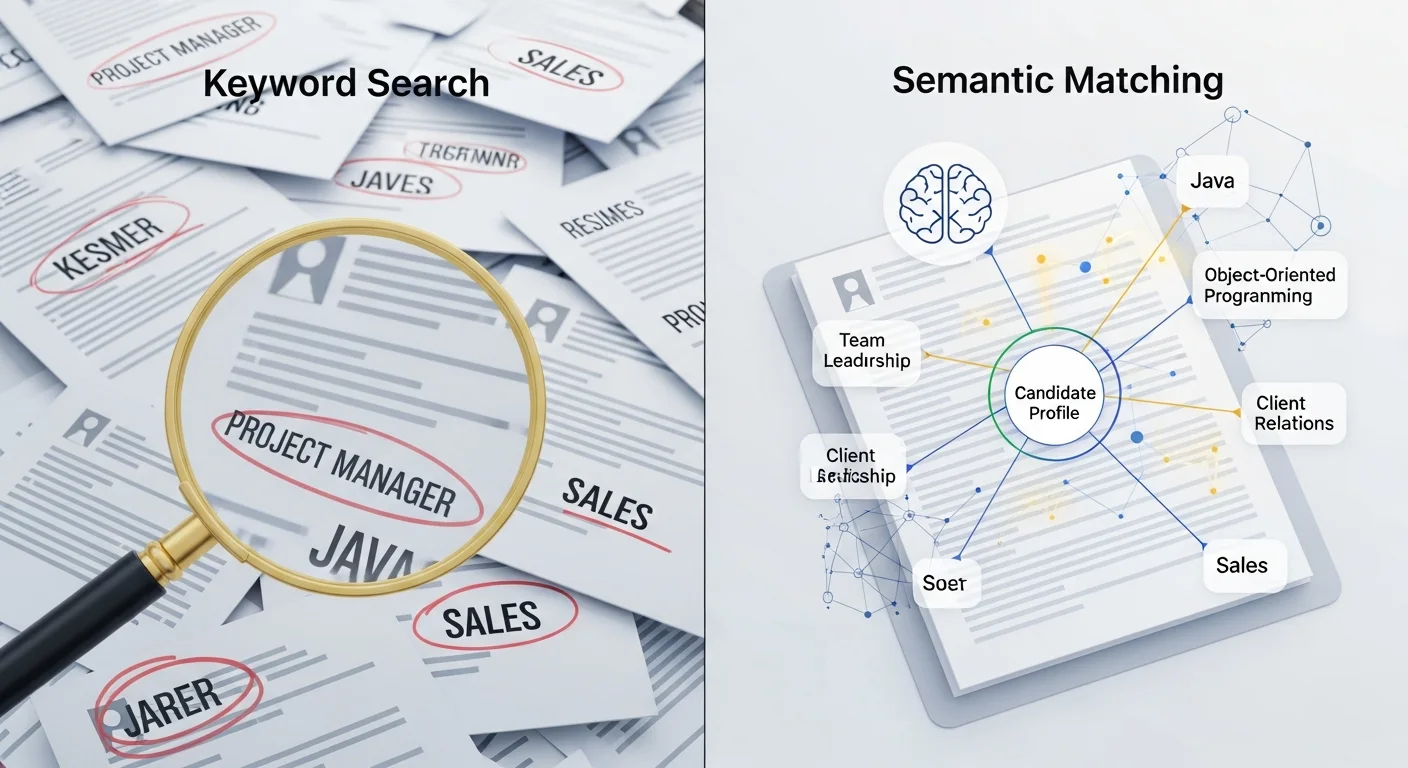
By using AI automated screening tools, companies can drive this metric down from days to minutes. When the shortlist is generated instantly via intelligent screening, the entire timeline shifts forward, giving your team a massive head start.
Time-in-screening
Time-in-screening provides another lens. This signal reflects how long candidates remain in evaluation before a decision is made. Prolonged screening time often points to decision uncertainty or inconsistent thresholds rather than candidate scarcity. By keeping this metric under 24 hours, you can maintain the "candidate momentum" that is essential for high-velocity hiring. You can essentially measure the "pulse" of your funnel. If the pulse slows down, you know exactly where to apply pressure.
Decision latency between stages
Decision latency between stages completes the picture. Delays between screening, interview, and offer stages are often operational rather than strategic. This latency is the silent killer of time-to-hire. It doesn't show up as an "active" task, but it adds days of unnecessary bloat to the process. By quantifying this latency, you can identify which managers or teams are the primary bottlenecks. You stop guessing why things are slow and start seeing the specific hand-off points where the ball is being dropped and where the momentum is lost.
Together, these early signals offer insight that historic reporting cannot. They show not just how long hiring took, but where time was spent.
Real-Time vs Historic Timeframes
The difference between real-time and historic measurement is the difference between navigation and autopsy. Historic metrics explain what happened after the fact. Real-time signals show where delays are forming.
Detecting delays as they emerge allows teams to act while options still exist. A stalled shortlist can be addressed before interviews are scheduled. A delayed decision can be escalated before candidates disengage. These small interventions prevent downstream compounding.
Operational visibility replaces reactive reporting. Instead of waiting for monthly summaries, leaders see pacing across roles as it unfolds. This visibility is especially important at scale, where small delays repeated across many roles create systemic slowdowns.
Teams that adopt this mindset often rethink how they interpret hiring speed analytics. Speed becomes a pattern to manage, not a number to defend.
How Real-Time Metrics Improve Time-to-Hire
When early signals are visible, correction happens sooner. First and foremost, these signals allow for the faster correction of stalled roles. Roles that stall can be identified and adjusted before urgency builds. Recruiters and hiring managers regain control instead of responding to escalation.
Consistent pacing across requisitions becomes achievable. Rather than some roles racing ahead while others lag, teams see where attention is needed. This consistency reduces surprise and improves planning accuracy.
Emergency hiring cycles also decline. Many rushed decisions occur because delays were discovered late. When real-time hiring metrics surface issues early, teams avoid last-minute pressure that leads to compromised outcomes.
These improvements do not come from asking recruiters to work faster. They come from removing early friction that slows everything down later. When teams examine how time is lost in hiring, they often connect it with recruiter productivity metrics, because early efficiency directly affects how smoothly roles move forward. When hiring speed stalls, recruiter productivity drops quietly through rework, repeated screening, and reactive scheduling, which is why time-to-hire metrics and recruiter productivity must be evaluated together.
When Faster Is Not Better
Not all delays are problems. Speed is a means to an end, not the end itself. If your only goal is to drive your time-to-hire improvement metrics to the absolute floor, you will inevitably destroy your quality of hire. There is a point of diminishing returns where "faster" becomes "rushed." If you pressure a hiring manager to decide in two hours, you aren't being efficient; you are being reckless. Some roles require careful consideration, alignment, or additional context. Treating every slowdown as a failure can lead to rushed decisions that undermine quality. The goal of improvement metrics is not raw speed, but stable velocity with intent.
This is why real-time measurement must include guardrails. The goal is not maximum speed, but stable flow. When teams understand why a role is slower, they can decide whether intervention is needed or patience is justified.
Balancing speed with stability is the hallmark of a sophisticated TA leader. You want a process that is fast enough to secure top talent but stable enough to ensure a rigorous evaluation. This is where the "decision latency" metric is so valuable. It helps you distinguish between "Time Spent Evaluating" (which is good) and "Time Spent Waiting" (which is bad). If a manager takes three days to review a portfolio because they are doing a deep dive into the candidate's work, that is a high-value delay. If they take three days because they forgot to check their email, that is a low-value delay.
A mature measurement framework recognizes this distinction. It ensures that every minute spent in the recruitment process adds value to the final decision. By using AICRUIT to automate the low-value screening tasks, you actually buy back time for the high-value human evaluation. You aren't just making the process shorter; you are making it better. You are creating a "Quality Buffer" where speed at the top of the funnel allows for thoroughness at the bottom.
Measurement Maturity Changes Outcomes
Time-to-hire ROI does not begin at offer acceptance. It begins when early-stage signals are observed and managed. Organizations that treat measurement as a live system gain leverage that historic reporting cannot provide.
Measurement maturity means knowing which signals matter, when to intervene, and when to let a process unfold. It replaces reactive explanations with proactive control.
AI recruiting platforms such as AICRUIT support this evolution by making early-stage timing patterns visible at scale. The value is not in accelerating decisions blindly, but in revealing where time is lost and where it is well spent. When teams can see these patterns clearly, improvement becomes deliberate rather than accidental.
Organizations that align real-time signals with broader AI recruiting ROI frameworks gain a more accurate understanding of how speed, cost, and quality interact long before hiring ends.
Conclusion
Time-to-hire is not obsolete, but it is incomplete. When used alone, it explains delays after they occur and offers little opportunity for correction.
The real gains come from measuring earlier. By shifting your focus to early-stage signals, decision latency, and real-time operational visibility, you transform your talent acquisition function from a reactive cost center into a proactive growth engine. When teams track how time behaves during hiring, not just after, it becomes possible to intervene before problems escalate. This is where ROI truly takes shape.
Your measurement maturity determines your business impact. The more "real-time" your data, the more "real-world" your results. You stop being the person who reports on the "hiring crisis" and start being the person who prevented it. The ROI of your talent acquisition strategy doesn't start when the candidate signs the offer; it starts the moment you decide to stop staring at the rear-view mirror and start looking through the windshield.

.webp)