Hiring teams today are dealing with a reality that traditional resume screening methods were never designed to handle. Application volumes continue to rise, roles are becoming more skills-driven, and recruiters are expected to deliver accurate shortlists faster than ever. Yet in many organizations, early-stage screening still relies heavily on manual review or basic keyword filtering inside an applicant tracking system. The result is a process that feels busy, but not always effective.
This growing gap between hiring expectations and screening capability is why AI-driven resume screening tools have moved from experimentation to necessity. HR teams are no longer just looking to reduce workload; they’re looking for fair and consistent resume screening that can scale without sacrificing decision quality, to manage volume, and improve consistency. When screening fails early, the consequences ripple through the entire hiring funnel, interviews don’t convert, hiring managers lose confidence, and time-to-fill stretches longer than planned.
At the same time, not all tools solve the same problem. Some tools simply automate existing filters, speeding up exclusion without improving accuracy. Others apply deeper intelligence, interpreting skills, experience, and context to surface candidates who might otherwise be missed. For HR leaders evaluating these tools, understanding this difference is critical.
This guide is designed to help HR teams cut through the noise. Rather than focusing on marketing claims or feature checklists, it explains what AI resume screening tools actually do, how they work in real hiring workflows, and what capabilities matter most when choosing the right solution. Whether you’re exploring your first AI screening tool or reassessing an existing setup, this article provides a practical foundation for making informed decisions.
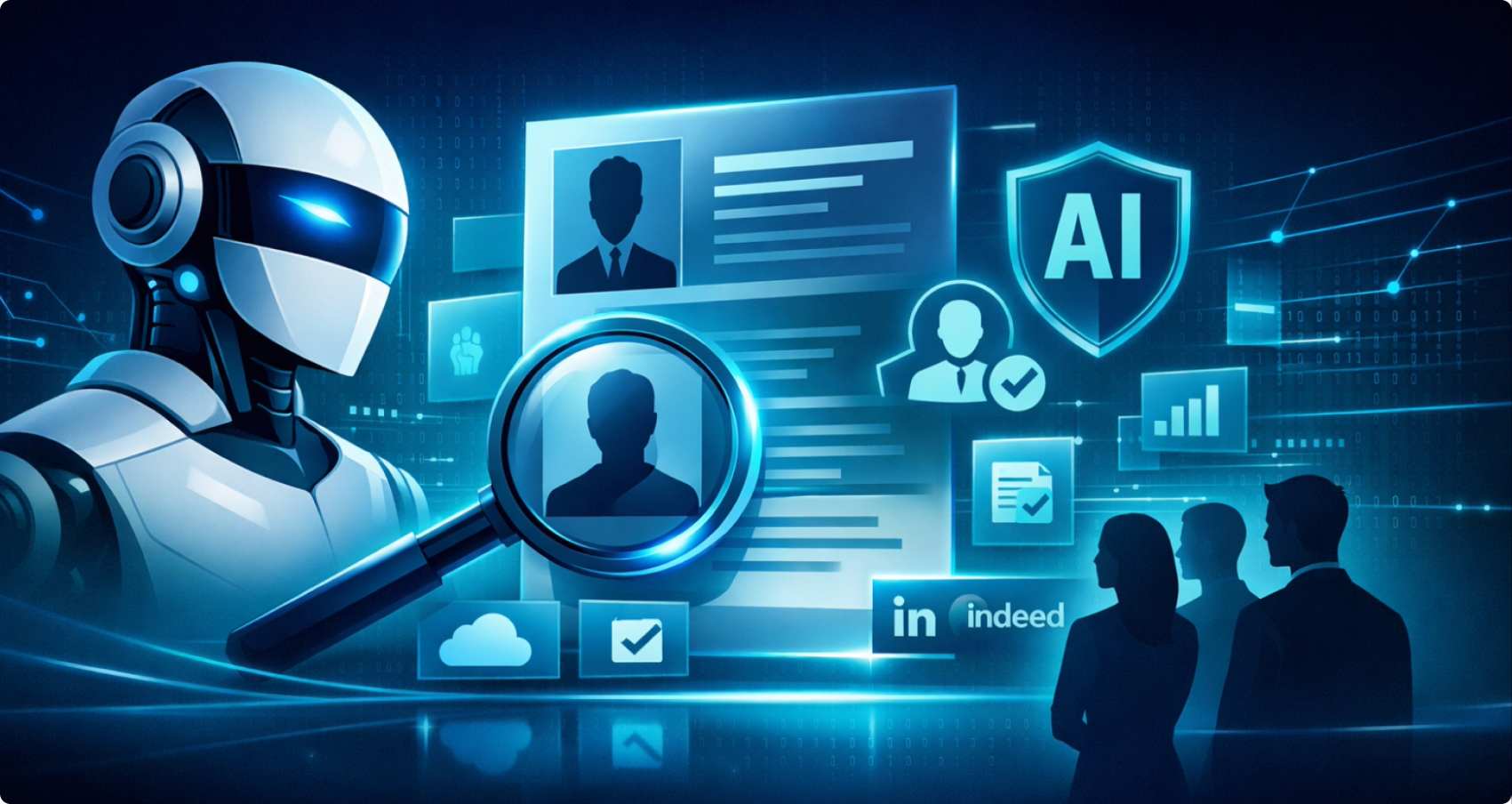
“AI-driven resume screening tools are software solutions that use artificial intelligence to analyze resumes, identify relevant skills and experience, and rank candidates based on role-specific criteria rather than simple keyword matching.”
Why HR Teams Are Turning to AI Resume Screening Tools
The shift toward AI in recruitment isn't a trend; it is a response to a broken supply-and-demand curve in hiring. The modern Talent Acquisition (TA) function is under immense pressure from 3 specific compounding factors.
- First is resume volume overload. With the ease of "1-Click Apply" on major job boards, a single open role can attract hundreds, sometimes thousands, of applicants. The sheer mathematical impossibility of reviewing 500 resumes deeply means that qualified candidates are inevitably ignored.
- Second is manual screening inefficiency. Human recruiters, no matter how skilled, are not built for high-volume data processing. Spending six seconds per resume leads to inconsistent shortlists, where one candidate is rejected for a formatting issue while a less qualified candidate advances because they used bold text.
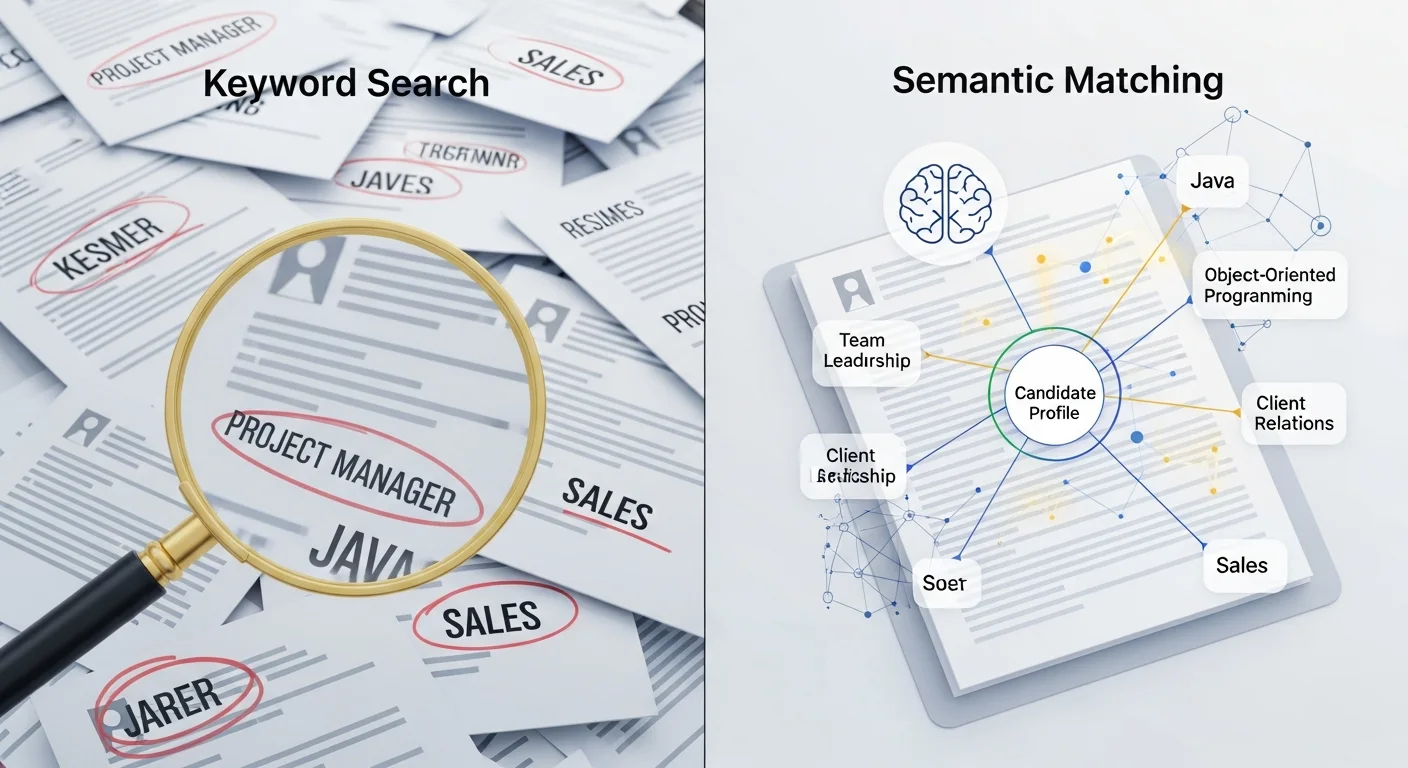
- Finally, there are the limits of ATS keyword filtering. For years, companies relied on Applicant Tracking Systems (ATS) to filter candidates. However, legacy ATS filters are rigid. They rejected a "Client Relations Lead" because the job description asked for a "Customer Success Manager," even though the skills are identical. HR teams are turning to enterprise resume screening tools backed with AI to fix this "false negative" problem and capture the talent their ATS is discarding.
Most recruiters spend a disproportionate amount of time reviewing resumes that will never reach an interview. Manual screening does not scale with application volume, and keyword-based filtering inside traditional ATS systems often excludes strong candidates for superficial reasons. To counter this, many organizations are adopting AI tools that focus on a skills-first hiring approach instead of relying solely on job titles or keyword matches.
As hiring becomes more global and roles more complex, HR teams need tools that can reduce screening effort without sacrificing quality. AI screening tools promise to solve this by automating early-stage evaluation while improving consistency and relevance.
What Is an AI-Driven Resume Screening Tool?
An AI-driven resume screening tool is designed to automate and improve the earliest stage of hiring: deciding which candidates should move forward.
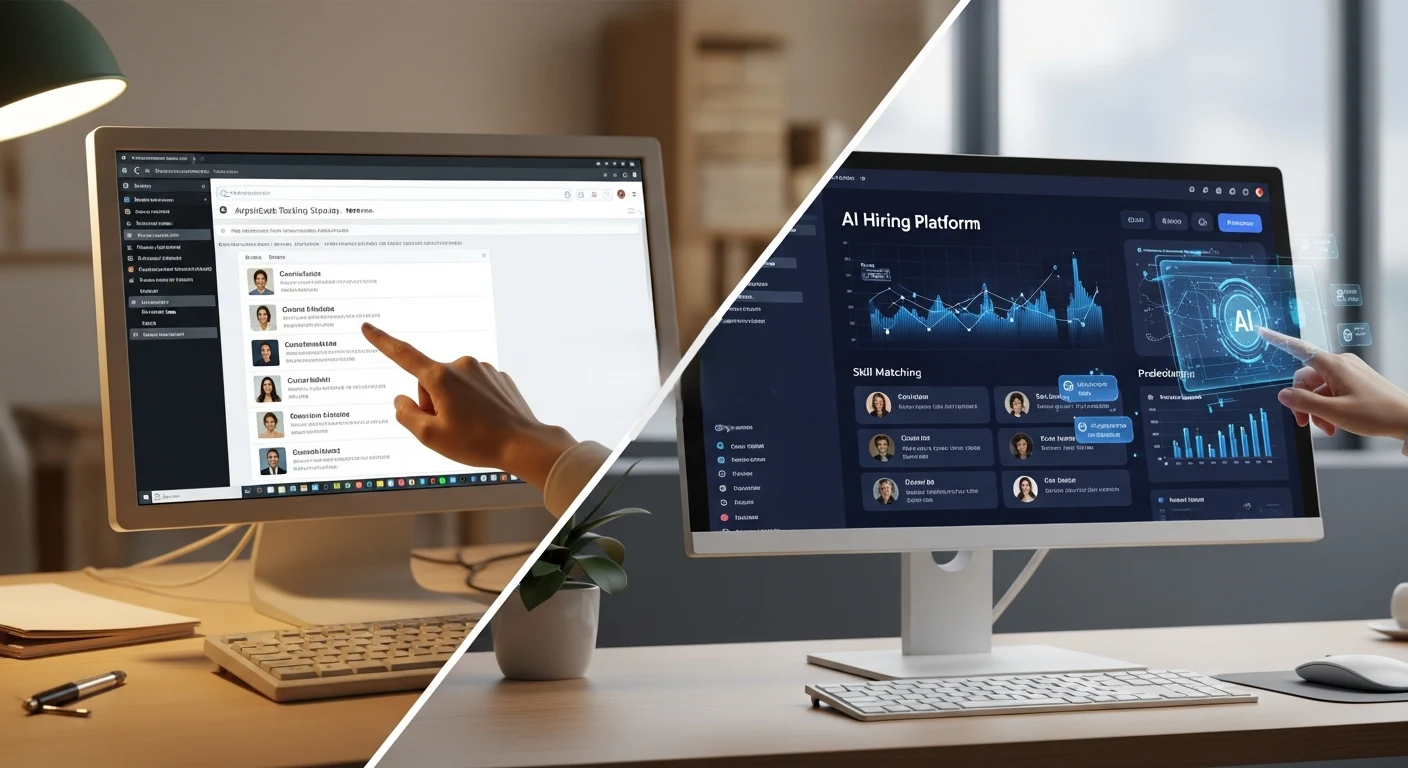
Unlike traditional ATS filtering, which relies on predefined rules and keyword matching, these tools analyze resumes to identify skills, experience patterns, and relevance to a specific role. Their goal is not just to reduce volume, but to improve decision quality.
In practice, these tools sit between your applicant intake (the job board or careers page) and your human recruiters. They do not replace the ATS; they augment it. The ATS manages workflow, compliance, and communication, while the AI screening tool acts as an intelligence layer that evaluates candidates more deeply before shortlisting.
How AI Resume Screening Tools Work
To trust the output, you must understand the engine. AI resume screening typically functions through a three-step process.
- Resume parsing and skill extraction
AI screening tools begin by parsing resumes to extract structured information from unstructured text. This includes identifying skills, responsibilities, tools, and experience context rather than simply detecting keywords. - Candidate ranking and relevance scoring
Once skills and experience are extracted, candidates are ranked based on how closely their capabilities align with role requirements. The AI weighs critical requirements heavily while treating nice-to-haves with lower priority, producing a graded list of applicants. This ranking is applied consistently across the entire applicant pool, reducing variability caused by human fatigue or bias. - Automating early-stage screening
By automating resume review at scale, these tools allow recruiters to focus on higher-value activities like interviews, stakeholder alignment, and candidate engagement.
Core Capabilities HR Teams Should Expect
Not all AI-driven resume screening tools are created equal. HR teams should evaluate tools based on capabilities, not marketing claims. A modern enterprise-grade solution must deliver on these core capabilities:
Skills-based evaluation vs keyword matching
The most important capability is the ability to evaluate skills contextually. Tools that rely primarily on keyword presence offer limited improvement over ATS filtering. True AI screening tools interpret how skills are applied, not just whether they appear.
Transparency and explainability
Recruiters must understand why candidates are ranked a certain way. Black box AI, where the tool gives a score but can't tell you why, is a liability. You should expect explainable AI. Tools that provide explainable insights build trust and enable better decision-making. Black-box scoring systems often fail adoption tests.
Bias reduction and consistency
AI screening tools should apply consistent evaluation logic across candidates. This consistency reduces subjective filtering and supports fairer hiring outcomes, provided the system is designed responsibly.
Scalability for high-volume hiring
Enterprise hiring demands tools that perform consistently at scale. Screening quality should not decline as application volume increases. Early-stage screening efficiency relies on the system’s ability to parse thousands of documents in minutes, ensuring your time-to-hire metrics don't suffer during hiring surges.
Common Limitations of AI Resume Screening Tools
AI-driven screening tools are not a silver bullet. To use these tools safely, you must be aware of their limitations.
- Over-automation risks occur when teams trust the score blindly. AI is a prediction engine, not a truth engine. It can make mistakes, especially with non-traditional career paths. Over-automation can lead to overconfidence in rankings without sufficient oversight.
- Black-box scoring remains a prevalent issue with cheaper tools. If you cannot see the logic, you cannot trust the result.
- Poor data or role definition often leads to poor results. If your job description is vague, the AI’s ranking will be vague. Tools trained on poor data or vague role definitions may reinforce existing hiring problems rather than solve them. The tool is only as good as the criteria you give it.
Where human review is still required
Additionally, AI screening does not replace the need for human judgment in later stages. Interviews, cultural alignment, and long-term growth potential still require human evaluation. AI should never make the final hiring decision. Its role is to shortlist. The human recruiter is responsible for validating the skills, assessing culture fit, and making the final judgment call.
Acknowledging these limitations is essential for responsible adoption.
How These Tools Integrate with ATS and Hiring Workflows
Most organizations do not replace their ATS when adopting AI screening tools. Instead, they integrate AI into existing workflows where your ATS (Workday, Greenhouse, Lever, etc.) remains the "Source of Truth" and the AI acts as an intelligence layer on top of it.
In this model, an AI tool pulls the resumes from ATS, evaluates them, and surfaces ranked candidates. Recruiters review AI-assisted shortlists, validate insights, and proceed with interviews as usual. Once candidates are shortlisted, many teams extend automation into AI-assisted interview tools to maintain consistency and structure across later hiring stages.
Successful adoption depends on minimal disruption, clear value, and recruiter trust in the system’s recommendations.
How HR Teams Should Evaluate AI Resume Screening Tools
When assessing tools, HR teams should focus on fit rather than features.
Questions to ask
Key evaluation questions include:
- Does the tool evaluate skills or just automate filtering?
- Are rankings transparent and explainable?
- How easily does it integrate with existing systems?
- Can recruiters override or review decisions?
- Does the tool scale across roles and regions?
Red flags to avoid
- Vendors who promise "100% accuracy" (impossible).
- Tools that require months of historical data training before they work (slow ROI).
- Avoid tools that promise full automation without accountability.
ROI considerations
Focus on "Time Saved per Hire" and "interview-to-offer ratio." If the tool is working, your recruiters should be conducting fewer interviews to get an offer because the shortlist quality is higher.
How AICRUIT Approaches AI-Driven Resume Screening
At AICRUIT, we designed our platform to address the trust gap in the market. We believe that AI tools designed for early-stage decisions should be glass boxes, not black boxes. AICRUIT is built upon these followiing fundamental principles.
Skills-first screening: It applies skills-based evaluation to resume screening, focusing on capability rather than job titles, and builds a comprehensive skills report for every candidate, ensuring that transferable skills are recognized.
Transparent candidate insights: We provide a clear, natural-language summary for every ranking. Recruiters receive clear insights into why candidates rank where they do, including strengths and gaps relative to role requirements. You never have to guess why a candidate was shortlisted.
Enterprise-ready workflows: We understand that hiring workflows vary. Our system is designed to plug into complex enterprise stacks, handling high-volume surges without friction and forcing teams to abandon their ATS or processes.
Final Takeaway
AI-driven screening tools have become essential for organizations that hire at scale—it's now part of the necessary infrastructure. However, selecting the right tool requires a clear understanding of how these systems function, identifying the important capabilities, and recognizing where human oversight is still crucial. The aim is not to eliminate human involvement in the process, but to reduce friction so that humans can prioritize building connections and establishing a screening foundation that ensures fair, accurate, and scalable hiring outcomes.
When implemented thoughtfully, these tools minimize manual effort, enhance consistency, and allow hiring teams to concentrate on what truly matters: making better hiring decisions.
What Next?
Audit your current funnel. Identify where the bottleneck is. If your recruiters are drowning in the "Apply" phase, it is time to pilot an AI screening solution. Start with a single high-volume role, measure the difference in shortlist quality, and build your business case from there. The future of hiring is not just faster; it is smarter.