Imagine buying a car based solely on the factory it was built in, without checking if the engine actually runs. Sounds ridiculous, right? Yet, for decades, that is exactly how we have hired people. We looked at the university (the factory) and the previous job title (the model name) and hoped the candidate could actually drive results. In hiring, this guesswork isn’t just inefficient; it’s expensive. Companies lose an estimated 30–50% of an employee’s annual salary when a poor hiring decision is made, and most of these mismatches stem from relying on credentials instead of capability.
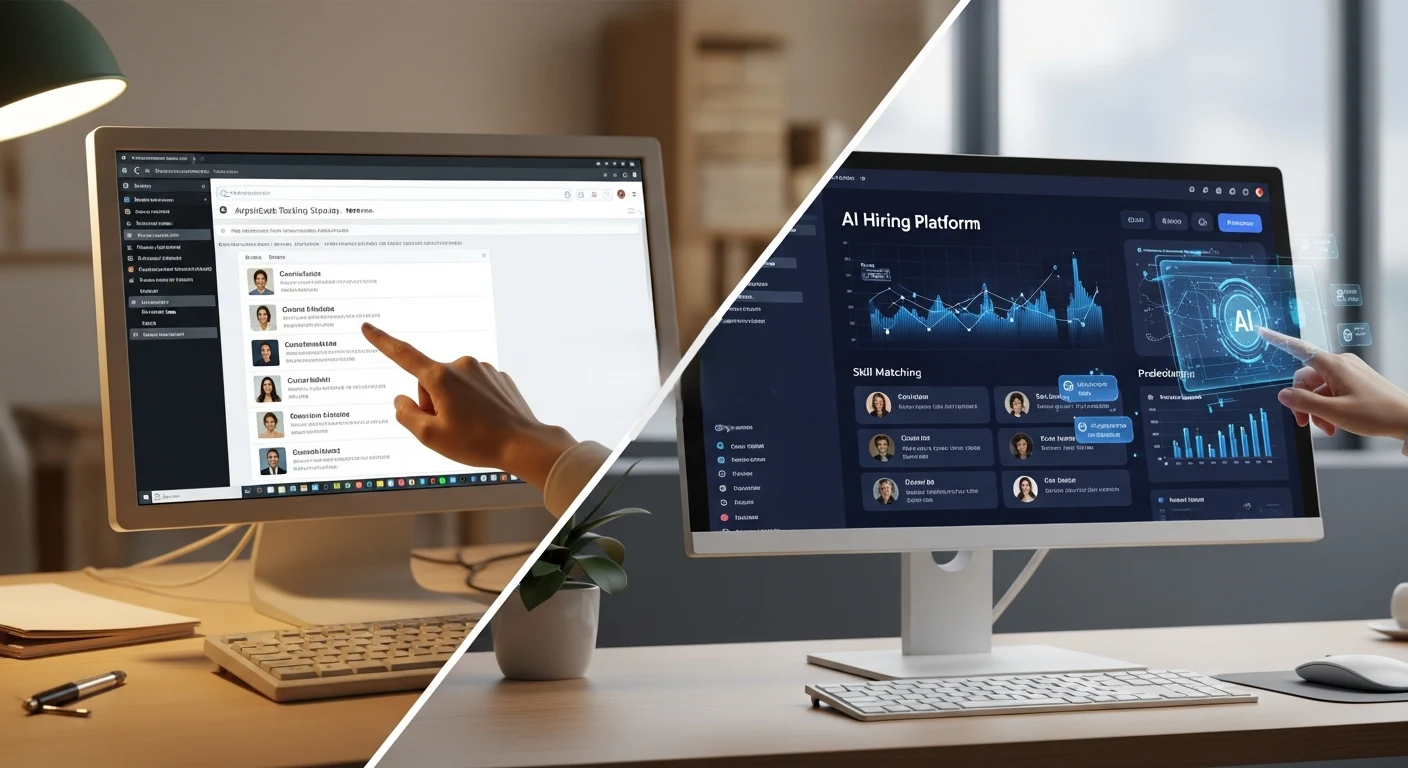
The world has changed. The "paper ceiling," the barrier that blocks qualified candidates simply because they lack a specific degree, is crumbling. The hiring landscape is undergoing a fundamental transformation, and at the center of that shift is the rise of skills-based AI recruitment, a strategic approach that prioritizes real capability over credentials.
But the transition isn’t just philosophical. It’s driven by practical pressures: talent shortages, role complexity, digital acceleration, and performance expectations that demand measurable competence rather than impressive resumes. It is no longer about where you learned; it is about what you can do. This shift has created an environment where technology, particularly AI, plays a central role in enabling fair, accurate, and scalable hiring decisions.
The Global Shift Toward Skills-Based Hiring
This isn't just a buzzword trend that will vanish. This is a structural change in the global labor market driven by necessity. The shelf life of a technical skill has dropped to roughly 2.5 years. If you are hiring based on a degree earned ten years ago, you are essentially hiring based on obsolete data.
Why job titles and degrees no longer predict performance
For decades, employers used degrees and job titles as the standard hiring filter. They were convenient signals, but signals that rarely told the whole story. A degree could validate theoretical knowledge but said little about adaptability, creativity, or resilience. A title might reflect experience but not necessarily the level of contribution or impact.
Transitioning from degree-based to skills-first hiring is accelerating because employers have realized that pedigree does not equal potential. Many top-performing employees never followed traditional career paths, while others with impressive credentials fell short in real-world execution. This disconnect has pushed HR teams to rethink how candidates are evaluated, accelerating the shift toward unbiased resume screening an approach grounded in capability-first models that prioritize skills, relevance, and fair assessment.
Demand for capability-first recruitment
Modern organizations require agility, which demands employees who can solve problems, learn quickly, and adapt to changing environments. Many companies are shifting toward a capability-first mindset, ensuring teams have the exact competencies needed for modern roles and evaluating candidates not by where they’ve been but by what they can contribute.
Skills-first hiring acknowledges that career success is multidimensional. It recognizes that talent doesn’t always look uniform and that valuable ability can emerge from nontraditional paths. This aligns with contemporary models that move away from pedigree-focused evaluation toward data-driven skills evaluation.
Real-world hiring trends from Deloitte, WEF, SHRM
Global research organizations consistently highlight the shift toward skills intelligence systems. The giants of industry analysis have set the stage for this shift:
- The World Economic Forum (WEF) predicts that 50% of all employees will need reskilling by 2025, which is right now.
- Deloitte reports that organizations with a skills-based approach are 63% more likely to achieve results than those without.
- SHRM (Society for Human Resource Management) has found that nearly 80% of employers view skills assessments as just as or more important than college degrees.
These trends underscore a clear pattern: the future of talent acquisition depends on understanding and evaluating skills at a deeper, more contextual level
Learn how teams adopt skills intelligence systems: AI-driven Resume Screening Tools: What HR Teams Need to Know
What Skills-Based Hiring Actually Means
Before we dive into the tech, let's define our terms. What are we actually talking about when we say "skills-based"?
Definition: Skills-Based Hiring is a recruitment approach where candidates are evaluated based on their specific competencies and practical abilities (soft and hard skills) rather than their educational background, years of experience, or previous job titles.
This definition is central to modern hiring because it provides a more accurate, equitable, and performance-driven approach to selection.
Moving from credentials → competencies
Skills-based hiring shifts the focus from what candidates claim to what they prove. It reframes hiring around observable, measurable competencies. A candidate may have no formal degree but years of hands-on expertise that signal strong potential. Another may hold a prestigious title yet lack the adaptability required for fast-paced environments.
To operationalize this shift, hiring teams must adopt a competency-based evaluation mindset, one that asks, “What does success look like in this role?” rather than, “What should this person’s resume look like?” It sounds simple, but it fundamentally restructures the recruitment funnel. You’re no longer filtering out people without traditional credentials; you’re filtering in candidates who offer proven skills, genuine capability, and higher performance potential.
How organizations redefine job requirements
When organizations adopt a skill-based hiring process, the first step is rewriting job descriptions. Instead of defaulting to surface-level proxies like 'Bachelor’s Degree required,' or arbitrary years of experience, modern organizations are digging deeper. They are conducting a comprehensive role-specific skills assessment to pinpoint the exact competencies needed for daily success, whether that’s advanced Python coding, crisis negotiation, or cross-functional leadership.
By using competency mapping, forward-thinking companies are replacing vague credential requirements with verifiable performance metrics, ensuring that every 'must-have' listed in the description directly correlates to the output expected in the role. From there, they break roles into their atomic components. A "Sales Manager" isn't just a title; it is a collection of skills: CRM management, negotiation, public speaking, and data analysis. When you define the role by these components, you can measure them objectively. This clarity is essential for defining clear, measurable competencies that form the basis for AI-driven evaluation and automation, as you cannot automate what you cannot define.
Skill taxonomies and capability frameworks
A true skills-first model depends on structured classification systems that define what skills a role requires, how proficiency levels should be assessed, and which competencies relate to performance indicators. These frameworks often include technical skills, behavioral competencies, learning agility, and domain-specific capabilities.
Organizations employing these taxonomies create more transparent evaluation systems, enabling fairer hiring decisions and clearer development plans. This approach supports a scalable structure for capability-first workforce planning, one of the semantic clusters vital to modern HR transformation.
How AI-Powered Talent Acquisition Supports Skills-Based Hiring
This is where the rubber meets the road. You can have the best skills-first philosophy in the world, but if you have 1,000 applicants, you cannot manually assess the skills of every single one. You need leverage. You need AI-powered talent acquisition.
Skill extraction from resumes
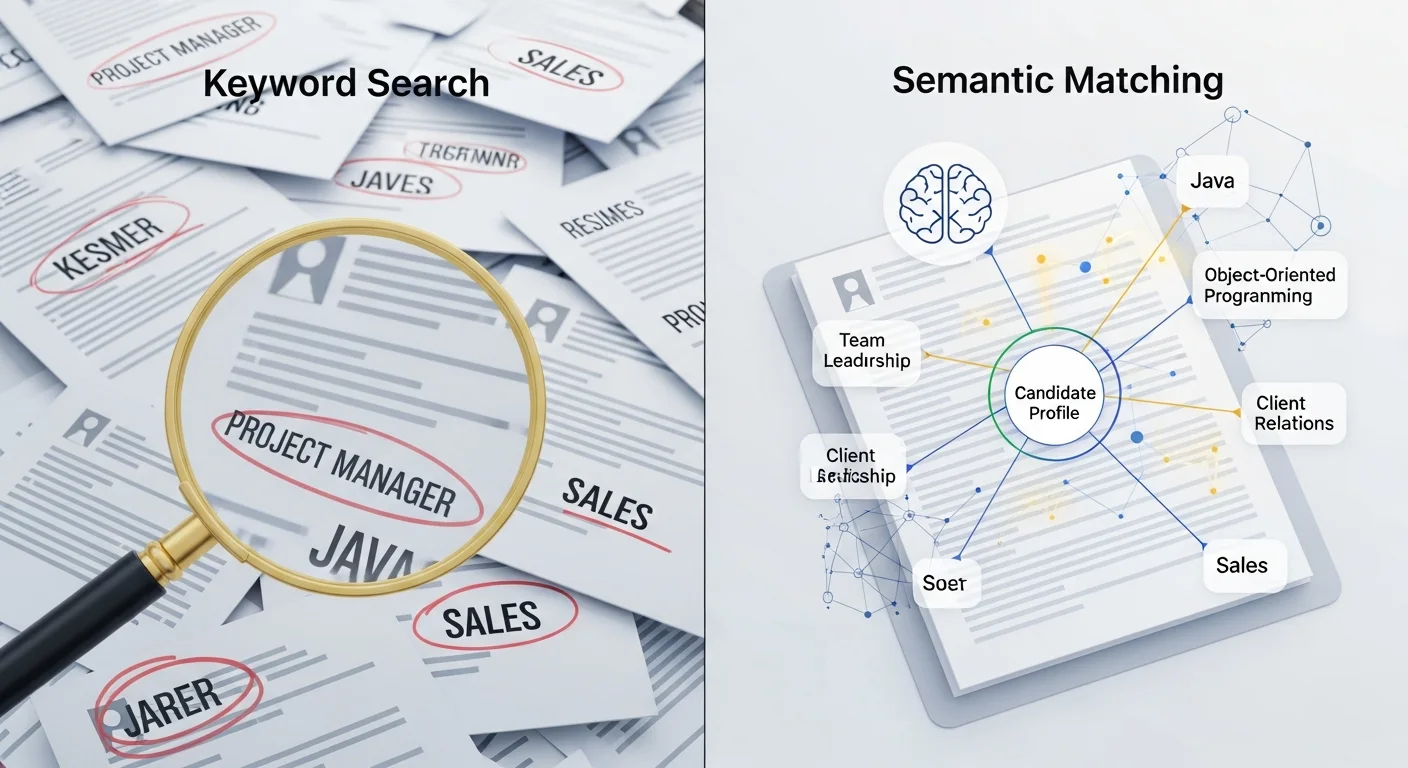
AI reads resumes differently from humans. It doesn’t skim; it evaluates. By breaking down text into skill indicators, contextual clues, and competency patterns, AI uncovers strengths that are often overlooked during manual screening.
Advanced AI tools identify actual capability rather than keyword presence. They notice when a candidate describes project ownership, problem-solving, or leadership in subtle ways that humans might miss. They perform semantic analysis to extract skills. If a candidate writes "I built a React app," the AI tags them with "React.js," "JavaScript," and "Front-end Development."
Intelligent skill-matching technology
After extracting skills, AI evaluates how well a candidate's technical and behavioral skills match the role requirements. Instead of simply counting keywords, it assesses their relevance, recency, and contextual strength.
This ensures better alignment between candidate capabilities and job expectations. It also supports more accurate comparisons, a key underpinning of role-specific competency mapping, which is one of the essential semantic clusters ensuring deeper relevance in this article. The accuracy of this approach connects with insights from evaluation-performance comparisons.
Related Read: How AI helps Identifies Transferable Skills Hidden in Resumes
Competency analysis for better candidate fit
Competency analysis looks beyond technical ability to assess broader indicators like communication, leadership, adaptability, and critical thinking. These competencies significantly influence performance and long-term success but are often difficult to evaluate manually.
AI evaluates these indicators through textual patterns and historical job context, enabling more holistic analysis. This aligns with the concept of AI-assisted capability profiling, one of the semantic clusters signaling deeper analytical relevance for this topic.
AICRUIT: Enabling Skills-First Hiring at Scale
To implement these principles effectively, organizations require platforms that can execute skills intelligence at scale. We developed AICRUIT after identifying this gap in the market. Everyone wanted to hire for skills, but their tools were stuck in the past, filtering for keywords and colleges. We decided to build an engine that thinks like a skills-first recruiter.
Automated skills evaluation across thousands of applicants
AICRUIT processes resumes using advanced skills extraction and semantic understanding. It evaluates applicants consistently and objectively, removing guesswork and human fatigue. This automation ensures every candidate receives equal opportunity, regardless of background or unconventional career paths. AICRUIT treats the first applicant and the last applicant exactly the same. Our automation supporting skills-first hiring scans every single profile, extracting skills and mapping them to your specific criteria.
Through its structured methodology, AICRUIT supports organizations in implementing future-ready workforce frameworks, another semantic key that strengthens thematic depth across the topic landscape.
Transparent skill alignment scoring
AICRUIT provides clear skill alignment scores, giving hiring teams visibility into strengths, improvement areas, relevance to role requirements, and proximity to ideal candidate benchmarks.
We don't believe in black boxes. If our system tells you a candidate is a 95% match, we want you to know why. AICRUIT provides [intelligent AI talent solutions] that offer transparent scoring. You can see exactly which skills matched, which were inferred, and where the gaps are.
This transparency aligns with insights from bias-reduction methodologies where clarity in evaluation reduces subjective influence.
Identifying overlooked high-potential candidates
AICRUIT uncovers candidates with strong transferable skills who might not fit traditional checkboxes. This elevates internal mobility, supports upskilling initiatives, and broadens access to talent pools previously overlooked. A traditional ATS would auto-reject them. We highlight them because our algorithms see that their skills in "Logistics" transfer perfectly to your "Operations Manager" role. We help you discover hidden talent your competitors are ignoring.
Why Skills-Based Hiring Improves Hiring Accuracy
Hiring accuracy isn't a suggestion; it's the strategic bullseye for modern business. We must move past the question of 'preference' and focus only on 'proof.' The data validates that the skills-first method acts like a smart missile, guiding recruitment efforts to achieve a direct hit: measurably enhanced team productivity and a sharp reduction in costly turnover risk. How skills-based hiring improves accuracy is the formula for that precision.
Reduces bias and subjectivity
Subjectivity undermines diversity. Hiring based on "gut feeling" tends to favor candidates who share similar appearances and communication styles. A skills-first evaluation reduces the influence of demographic factors, prestigious degrees, and well-known employers. By focusing solely on capability, organizations reduce unconscious bias and create a more equitable hiring process. Reducing bias through skills-first hiring isn't just a moral victory; it's a performance victory.
Improves role alignment
Candidates selected based on real skills perform better, onboard faster, and stay longer. Skills-first hiring ensures a stronger match between candidate ability and job expectations, which increases productivity and reduces turnover.
Conclusion
In 2025, the recruitment industry stands at a clear crossroads: clinging to the outdated, prestige-focused, and subjective manual screening processes, or advancing into a data-driven future. Skills-first hiring is no longer a trend but a global standard adopted by leading organizations and governments, effectively ending the debate against slow, biased manual methods that simply cannot compete with the speed and depth of AI-driven insight. AICRUIT empowers enterprises to operationalize this shift by delivering a complete skills intelligence system that supports hiring and long-term capability planning. By adopting tools that reinforce skills-first frameworks, companies build future-ready teams equipped to perform and thrive.
The future is skills-based. The tool is AICRUIT. The time to switch is NOW.
Are you ready to see the talent you've been missing? Stop hiring resumes. Start hiring skills. Let AICRUIT show you the difference.