Hiring today isn’t failing because organizations lack good intentions. It’s failing because the systems used to screen candidates were never designed to deliver fairness, consistency, or accountability at scale.
Notice where hiring decisions actually happen. Not in interviews. Not in assessments. They happen quietly, early, and at speed, when resumes are filtered, skimmed, and rejected under pressure. This is the most influential stage of the hiring funnel, and paradoxically, the least structured. Human reviewers operate with limited time, incomplete information, and unavoidable cognitive bias. As application volume increases, fairness declines, not by choice, but by design.
This is why unbiased resume screening is no longer a training problem or a policy issue. It is a systems problem.
Fairness cannot depend on who reviews a resume, what time of day it’s read, or how familiar a candidate’s background appears. It must be embedded into the screening infrastructure itself. For hiring teams, fairness is no longer a subjective ideal. It is a measurable requirement. Modern screening must be auditable, repeatable, and defensible, capable of showing not just who was selected, but why every candidate was evaluated the way they were.
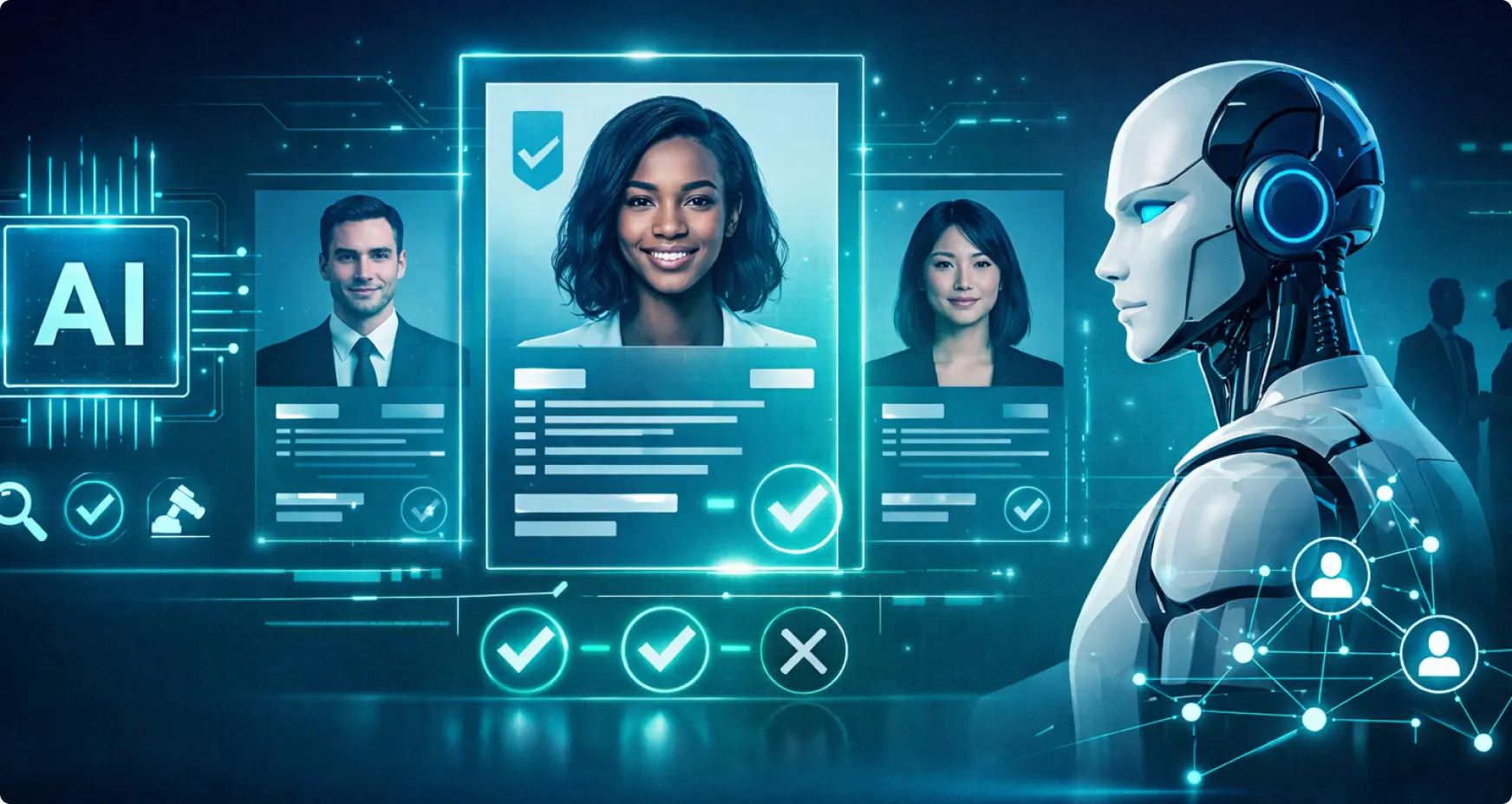
This is where AI fundamentally changes the equation. Not by replacing human judgment, but by restructuring the hiring infrastructure. Fair hiring practices with AI depend on consistent, skills-based evaluation applied equally to every candidate, not on subjective human judgment under time pressure. When designed responsibly, AI enables hiring teams to move faster and fairer, without sacrificing accuracy or accountability.
This article defines what unbiased resume screening actually means in 2025, why manual screening structurally fails to deliver it, and how organizations are redefining fairness by shifting from intuition-driven filtering to skills-first, explainable screening systems.
Why Early-Stage Resume Screening Is the Real Source of Hiring Bias
Early-stage screening determines who gets seen and who disappears, often permanently. When resumes are reviewed under time pressure, decision shortcuts emerge. Familiar universities feel safer. Linear career paths feel more credible. Unconventional experience is deprioritized, not because it lacks value, but because it requires more cognitive effort to assess.
Bias at this stage is rarely intentional. It’s systemic. And because rejected candidates are never revisited, early screening bias compounds quietly across the funnel. Because these decisions occur before interviews or assessments, they are rarely reviewed, challenged, or corrected. Once a candidate is filtered out at this stage, the opportunity for fair evaluation is permanently lost.
True bias-free candidate screening focuses on capability and experience rather than names, schools, or career familiarity.
Why Manual Resume Screening Breaks Under Scale
Let’s be honest with each other: the traditional way we screen resumes is flawed. It’s not your fault. The human brain is incredible, but it was not designed to process thousands of structured documents a day with zero fatigue and 100% objectivity. When we try to force it to do so, cracks appear in the foundation of our hiring process.
Why traditional resume screening creates hidden bias
Every recruiter has been there: sifting through dozens, hundreds, even thousands of resumes, often under pressure, time limits, and hiring quotas. In that state, subtle biases emerge. Perhaps a candidate’s name feels familiar, perhaps a certain university stands out. These aren't malicious acts; they are cognitive shortcuts. However, in the context of enterprise hiring, these shortcuts lead to a lack of diversity and missed opportunities. This is why bias cannot be solved through awareness training alone. Fairness requires structural intervention, not just behavioral guidance. Human reviewers, regardless of their intentions, often carry unconscious biases. A University of Washington study revealed bias patterns in manual review processes, demonstrating how invisible preferences influenced outcomes.
In this context, adopting a skills-first methodology, such as those explored in Skill-Based Hiring Guide, becomes essential.
Traditional candidate scoring systems focus on familiarity rather than capability. Candidates from lesser-known universities or nontraditional backgrounds often get overlooked, regardless of skill or potential.
Fair hiring practices with AI are designed to dismantle these issues. By removing the human fatigue factor from the initial screen, we stop judging candidates by their "vibe" or their formatting choices and start judging them by what actually matters: their potential.
The volume problem: HR teams drowning in applications
Modern hiring, especially for large or growing organizations, often means thousands of applicants per role. Processing that many resumes manually is a monumental task.
This is one of the biggest resume screening challenges HR teams face. When volume goes up, quality of review goes down. Great candidates get lost in the noise simply because they were applicant number 890, and the recruiter was exhausted by the time they got there.
According to ResearchGate, AI-backed resume tools drastically reduce screening time, shorten recruitment cycles, and lower cost-per-hire, reflecting how overloaded HR teams are with manual review pressures.
When volume overwhelms review capacity, fairness becomes collateral damage. Speed increases, but consistency disappears. This is where data-driven resume evaluation becomes essential, ensuring every application is assessed against the same objective criteria, regardless of timing or workload.
What Does Unbiased Resume Screening Really Mean?
Unbiased resume screening is a structured approach to evaluating candidates that minimizes the influence of personal, social, and demographic factors unrelated to job performance. Importantly, unbiased screening does not claim to eliminate bias. Instead, it focuses on identifying, managing, and reducing bias in a controlled and measurable way.
In practical terms, unbiased screening is not bias-free screening.
It is bias-aware and bias-managed screening.
Bias can never be fully removed from human or algorithmic decision-making. However, it can be limited, monitored, and corrected when the screening process is designed intentionally.
Fair Hiring Cannot Rely on Human Judgment Alone
Most organizations attempt to solve bias with training, guidelines, and good intentions. While important, these measures don’t address the core problem: humans are inconsistent evaluators at scale.
Two recruiters reviewing the same resume can reach different conclusions. The same recruiter may evaluate similar profiles differently depending on fatigue or workload. None of this is auditable, repeatable, or defensible.
True fairness is not about removing humans from hiring. It’s about removing subjectivity from the highest-volume decision point. Fair hiring requires systems that apply the same criteria to every candidate, every time. Without this consistency, hiring decisions cannot be reliably explained, audited, or defended, exposing organizations to reputational, legal, and operational risk.
Why Skills-First Evaluation Is the Foundation of Unbiased Screening
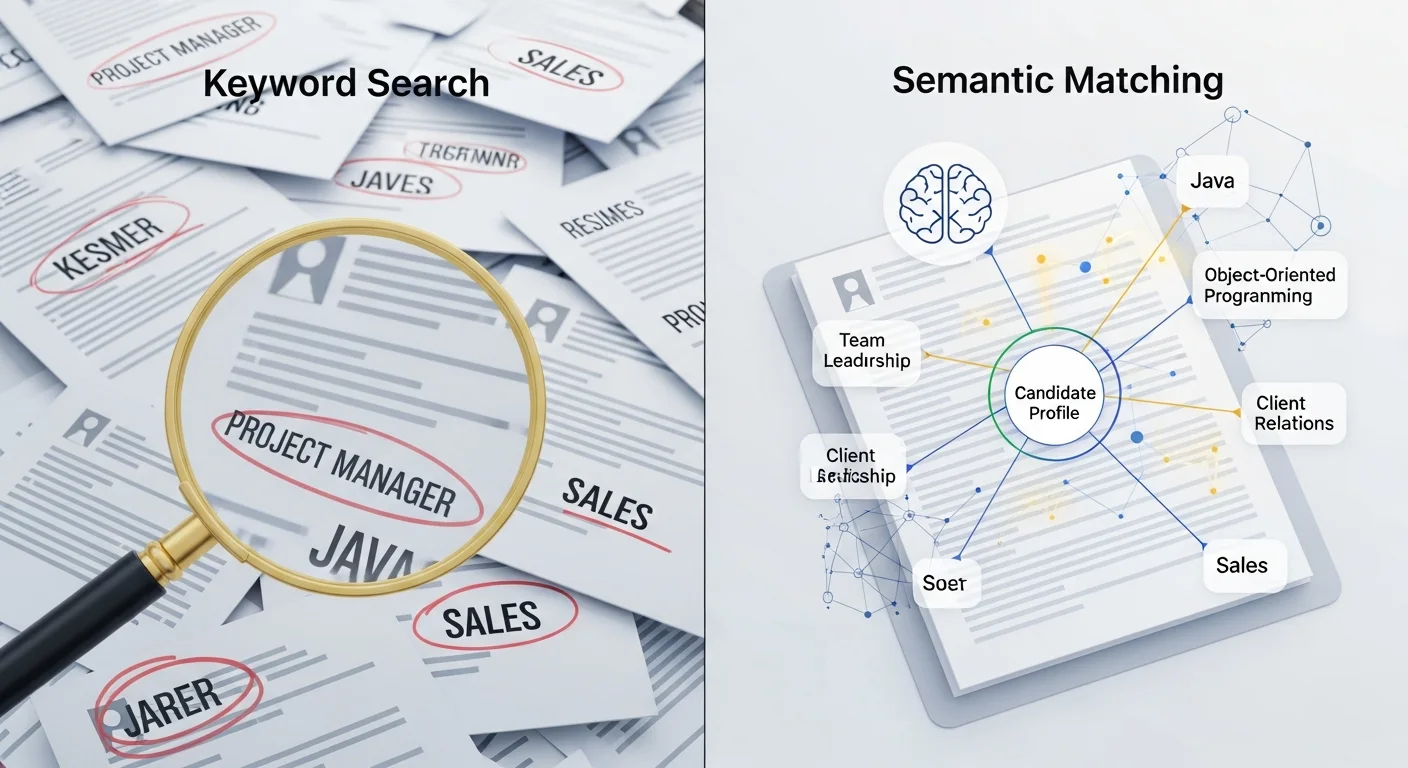
Traditional screening relies on proxies, degrees, job titles, and employer brand, because they are easy to recognize quickly. But proxies are poor predictors of performance and powerful carriers of bias.
Skills-first screening provides a fairer foundation for hiring by prioritizing demonstrated capability over background familiarity, ensuring candidates are evaluated on relevance rather than resemblance.
It evaluates candidates based on demonstrated capability rather than credentials, job titles, or linear career paths. It asks what candidates can do, not where they’ve been. This shift is essential for fairness, especially as career paths become non-linear and transferable skills increasingly define job success.
The purpose of AI in this context is not technical sophistication, but consistency, applying the same interpretive logic to every resume without fatigue or bias.
Objective scoring and ranking
Objective scoring means every candidate is judged using the same criteria. AI systems generate objective scores based on quantitative and qualitative criteria: skill match, years of experience, role-specific competencies, career trajectory, etc. This score isn't arbitrary; it's a mathematical representation of alignment. Then they rank candidates accordingly, creating a shortlist that’s consistent, repeatable, and defensible.
This removes variability caused by human mood, bias, fatigue, or time constraints. And it offers transparency and traceability, which is important for audit, compliance, and fairness standards.
(See also: How AI Helps Identify Transferable Skills Hidden in Resumes)
How AI Enables Unbiased Resume Screening
AI enables unbiased resume screening by applying consistent, skills-first evaluation logic to every candidate. Instead of relying on subjective judgment, AI standardizes how resumes are analyzed, compared, and shortlisted, ensuring fairness through repeatability and transparency.
Objective Scoring and Consistent Ranking
AI evaluates all candidates using the same predefined criteria, such as skill relevance and experience alignment. This creates objective scores and consistent rankings, eliminating variability caused by human bias, fatigue, or personal preference.
Identifying Transferable and Non-Linear Skills
AI looks beyond job titles and career linearity to identify transferable skills across roles and industries. This ensures candidates with non-traditional or evolving career paths are evaluated on capability rather than background familiarity.
Data-Driven Resume Evaluation at Scale
AI maintains consistent evaluation standards even when processing thousands of resumes. By removing volume-related bias, it ensures fair and accurate screening at scale without sacrificing speed or quality.
How AICRUIT Delivers Unbiased, Skills-first Screening
The industry is saturated with basic screening tools, but none truly solve the ethical and volume challenges simultaneously. So, how do you finally move beyond keyword filtering and into true skills-based decision-making? AICRUIT, an AI-powered platform, serves as a reference implementation of how unbiased, skills-first screening principles can be operationalized in real-world hiring environments. We didn't just build another Applicant Tracking System; we engineered a bias-busting, speed-enhancing engine designed specifically to handle the sheer volume and complexity of high-stakes enterprise recruitment.
Transparent ranking based on defined criteria
AICRUIT provides radical transparency in its process to tackle the "Black Box" problem, a common fear with AI tools. Ethical AI recruitment requires visibility into evaluation logic, not blind trust in automated outcomes. We give you a clear view of how the AI scored and ranked each candidate, eliminating the mystery and ensuring complete clarity on every hiring decision.
Zero demographic influence → purely skills-driven
AICRUIT focuses on AI-powered candidate screening that looks at what the person can do, not who they are. It evaluates only skills and experience, ensuring a merit-based approach consistent with global fair-hiring standards. This isn't just "PC culture", it's smart business. Diverse teams perform better, and our tool ensures you aren't accidentally filtering out your next top performer due to unconscious bias.
Faster shortlisting for high-volume recruiting
We built AICRUIT for the volume problem. For organizations receiving hundreds or thousands of applications per role, AICRUIT drastically reduces time-to-shortlist. Whether you have 100 applicants or 10,000, our system ranks them in real-time. What used to take a team of recruiters weeks can now be done in minutes. This speed to lead means you secure top talent before your competitors even open the first PDF.
The Business Impact of Unbiased Resume Screening
When you implement AICRUIT and adopt this workflow, the downstream effects on your organization are profound.
Better candidate-job alignment
Turnover is expensive. Often, bad hires happen because we misunderstood the resume. With skills-based scoring, your shortlists include candidates whose actual capabilities align with job requirements, not just those with flashy resumes. That increases the probability of better job performance, higher retention, and more value from new hires.
Reduced time-to-fill
Time kills all deals. In a competitive market, waiting two weeks to schedule an interview is a death sentence. By automating the top-of-funnel chaos, you can tap into candidates' enthusiasm while it's at its peak. Seize the opportunity to engage with them when their interest is highest, ensuring you attract the best talent before they consider other options.
Higher-quality shortlists
Imagine walking into a hiring manager meeting with 5 resumes, and all 5 are perfect fits. That builds trust. The hiring manager stops seeing HR as a bottleneck and starts seeing them as a strategic partner. Instead of random picks or resumes based on formatting or arbitrary signals, AICRUIT ensures that you get curated, high-potential candidates.
Improved diversity outcomes
By eliminating demographic biases and focusing only on skills, AI-driven systems support diversity and inclusion initiatives. This doesn’t just help with fairness; it also broadens talent pools, uncovers underrepresented candidates, and helps build a richer, more varied workforce.
Related Read: How AI Reduces Bias from Early-Stage Hiring Decisions
The New Standard for Unbiased Resume Screening in 2025
Unbiased resume screening is no longer aspirational. It is definable and measurable.
Modern screening systems must deliver:
- Objective, skills-based evaluation
- Consistent scoring across all candidates
- Transparent ranking logic that can be explained and audited
- Human oversight is applied after objective shortlisting
Ethical AI recruitment is defined by explainability, accountability, and the ability to audit how screening decisions are made at scale. Without transparency, automation simply replaces one form of bias with another.
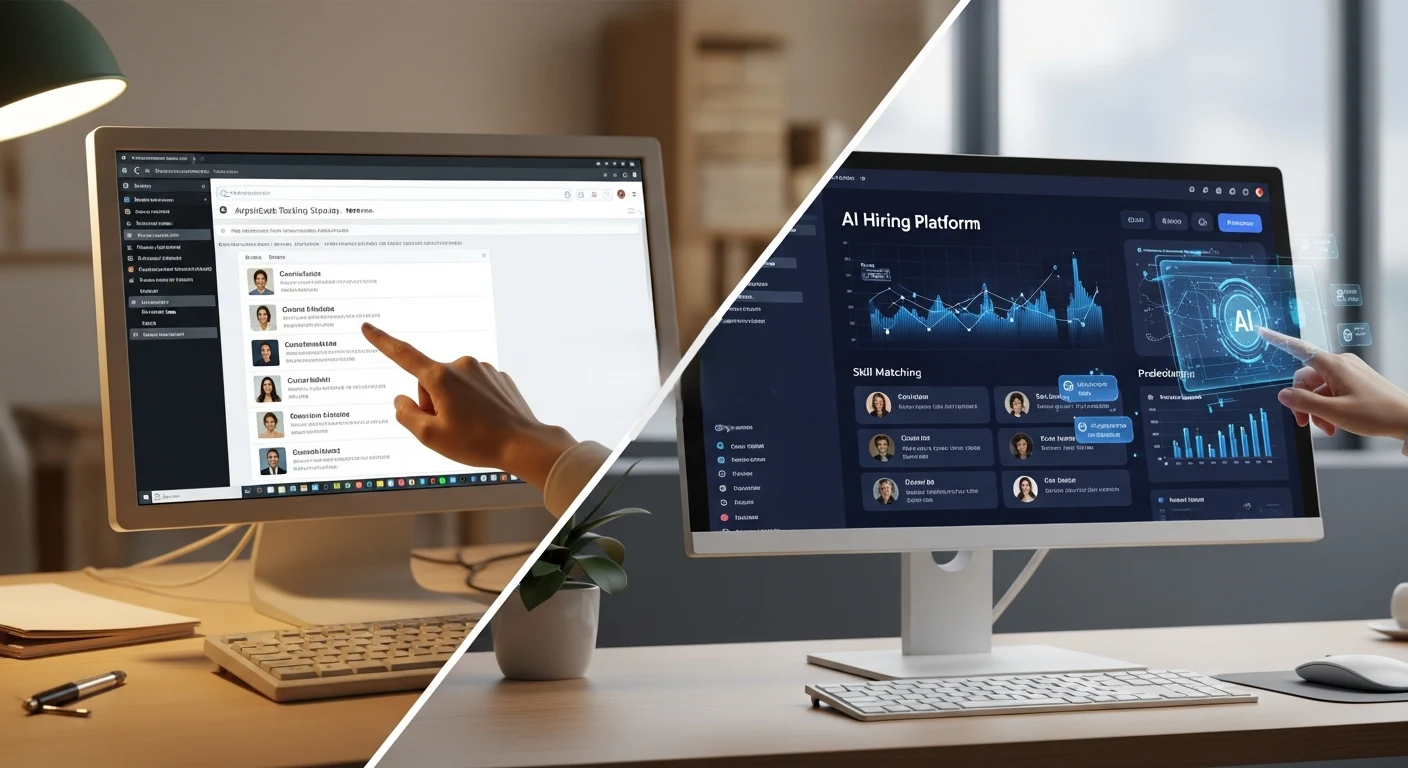
In this model, the ATS remains the system of record, while AI functions as the system of intelligence, interpreting resume data, identifying capability, and enabling fair, scalable decisions without dismantling existing infrastructure.
Related Read: ATS vs. AI Comparison
What HR Teams Should Do Next
If you are nodding along, feeling the weight of your current workload, it is time to make a change. Here is your roadmap.
- Audit your screening workflow
Start by examining how you currently screen resumes. How many hours a week does your team spend reading resumes? What is your current time-to-hire? Are you losing candidates? Are you relying on keywords? Human assumptions? Gut feelings? Map where bias, inconsistency, or inefficiency may be creeping in. Creating an efficient screening workflow starts with identifying the bottlenecks. If the bottleneck is "human reading speed," you have your answer. - Shift from manual to automated evaluation
This requires a mindset shift. It is not about removing human judgment, but about ensuring that judgment is applied after a fair, objective shortlist has been established. You need to get your team comfortable with trusting data. Automate the first filter, let human judgment focus on higher-value, nuanced evaluation (interviews, culture fit). - Adopt AI-driven resume screening tools
Tools like AICRUIT, with transparent, skills-based screening, can revolutionize your hiring. Its transparent scoring and unbiased screening help organizations modernize without risk.
Conclusion
The role of the Recruiter is changing. It is shifting from "Administrator" to "Talent Advisor." You shouldn't be paid to read PDFs; you should be paid to build relationships, assess culture fit, and close deals.
In an age where talent risk and hiring volume are skyrocketing, fairness and speed are no longer optional; they’re mandatory. Organizations that cling to manual methods risk inconsistency, bias, and lost talent. They used to think we had to choose between being fast and being fair. But that trade-off is dead. With advanced AI screening systems, one can achieve speed without sacrificing our ethics and can be fair without slowing down business growth.
With research confirming AI’s ability to enhance accuracy and reduce bias, companies worldwide are rapidly adopting AI for high-volume hiring as the foundation for skills-first evaluation. AICRUIT stands at the forefront, offering an intelligent, ethical, and high-performance solution that empowers hiring teams to build stronger, fairer talent pipelines.
Learn more about AI screening accuracy: How AI Improves Resume Screening Accuracy Compared to Manual Review
The only question left is: Are you ready to stop drowning in resumes and start hiring the best talent, faster?
Ready to revolutionize your hiring process? Don't let the next great candidate slip through the cracks of a manual process. Try AICRUIT today and experience the power of fair, fast, and automated screening.