When leaders talk about return on investment in hiring, they often assume the same logic applies everywhere. Faster hiring is good. Lower cost is better. Better candidates are the goal. But the reality looks very different once company size enters the picture. AI Recruiting ROI at scale is not measured by how fast one role is filled or how much cost is saved on a single hire. As hiring volume increases, ROI shifts toward consistency, risk reduction, and the ability to produce reliable outcomes across hundreds or thousands of decisions. What delivers clear returns for a small hiring team often breaks under scale, where variability, rework, and decision inconsistency quietly erode value. This is why organizations operating at scale must evaluate AI recruiting ROI differently, focusing less on isolated wins and more on system-wide stability, defensibility, and long-term hiring efficiency.
A fast-growing startup and a global enterprise may use the same recruiting technology, but they measure success in completely different ways. One optimizes for speed and survival. The other optimizes for consistency, risk, and governance. When the same ROI lens judges both, confusion follows.
This guide promises to dismantle the generic ROI calculator and replace it with a tailored lens that fits your specific scale. Whether you are fighting for survival or fighting for consistency, understanding these nuances is the only way to build a business case that survives the CFO’s scrutiny.
AI recruiting ROI at scale refers to how hiring technology delivers value as volume, complexity, and organizational risk increase. At scale, ROI is measured less by speed or short-term savings and more by consistency, variance reduction, compliance, and long-term hiring stability.
Why Recruiting ROI Is Not One-Size-Fits-All
The most common mistake organizations make is applying SMB ROI logic to enterprise hiring or enterprise governance metrics to SMB teams. Vendors promise efficiency gains. Leaders expect faster results. Finance teams look for cost reductions. These expectations make sense in isolation, but they ignore a key variable: scale.
For smaller teams, hiring is often urgent and resource-constrained. Every open role directly affects delivery, revenue, or growth. ROI is felt immediately when a role is filled faster or with less effort. For enterprises, hiring is continuous and distributed. A single role rarely creates urgency, but inconsistency across hundreds of roles creates risk.
This is why recruiting ROI by company size cannot be measured using a single playbook. The same AI recruiting platform can deliver value in both contexts, but the metrics that prove that value and the timelines over which they appear are fundamentally different.
ROI Drivers for SMB Hiring Teams
For small and mid-sized businesses, every hire is a high-stakes gamble. When you have a headcount of eighty people, a single bad engineer or a toxic sales manager impacts more than just their department; they impact the company’s burn rate and culture. Conversely, when teams are lean, not filling a role quickly can create immediate pressure. Projects slow down. Customer commitments are delayed. Existing employees stretch beyond capacity.
In this environment, the ROI of AI is visceral and immediate. It is about survival and leverage.
Speed to shortlist
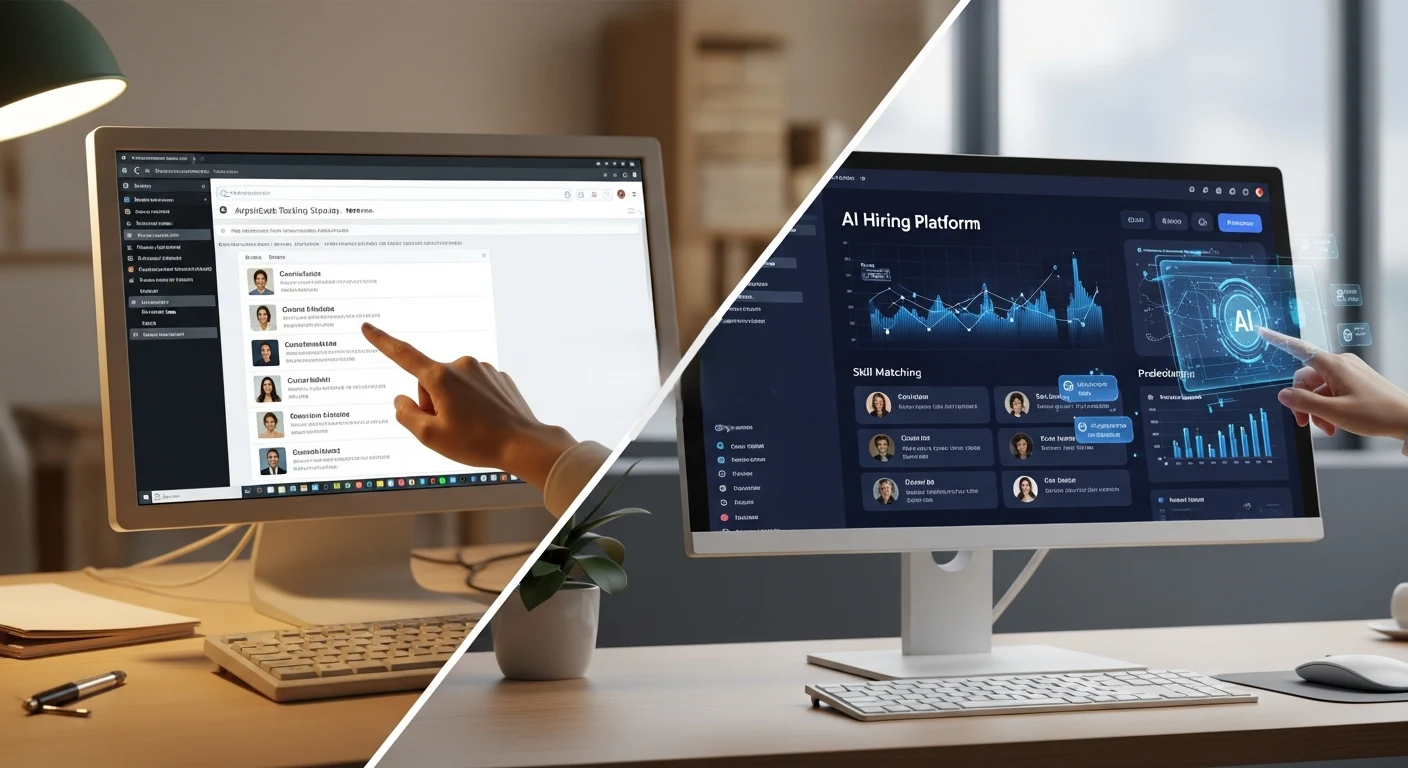
Speed to shortlist is often the first place SMBs feel ROI. In an SMB, the recruiter is often a "department of one" or perhaps a founder wearing a recruiting hat. Decisions happen faster, and roles move forward without stalling. Every day a seat sits empty is a day the product isn't shipping, or the revenue isn't closing. They do not have the luxury of spending three weeks passively collecting resumes. AI tools step in here not just to organize data, but to act as a force multiplier. The ROI is calculated by looking at the reduction in "time-to-interview." If an AI tool can instantly surface the top five candidates from a pool of three hundred, it saves the solo recruiter from drowning in administrative noise. This speed is not about rushing decisions, but about removing unnecessary delay at the earliest stage.
Recruiter leverage
Another critical driver is recruiter leverage. Small teams cannot afford to hire a coordinator to screen resumes. One recruiter supports multiple functions or works alongside other responsibilities. So, they need their senior recruiter to be closing candidates, not reading PDFs. By adopting AI recruiting strategies, these companies essentially hire a digital coordinator for a fraction of the cost of a human salary. ROI appears when the recruiter can handle more requisitions without burnout. When early evaluation becomes more efficient, recruiter capacity expands without adding headcount. You are buying bandwidth. You are buying the ability to punch above your weight class without bloating your overhead.
Cost containment
Cost containment rounds out the picture. SMBs operate with tighter budgets and less tolerance for repeated searches. Reducing time spent on screening, agency reliance, or reopened roles directly affects cash flow. This is where AI recruiting ROI SMB narratives often center: doing more with the same or fewer resources.
ROI Drivers for Enterprise Hiring Teams
Enterprise hiring operates on a different axis. Speed still matters, but consistency matters more. When organizations hire at scale, variability becomes expensive. Small inconsistencies repeated hundreds of times turn into a major operational risk.
Volume consistency
Volume consistency is one of the strongest enterprise ROI drivers. Enterprise recruiters are dealing with thousands of applicants across hundreds of requisitions globally. The danger isn't just speed; it is variance. Human recruiters get tired. A recruiter in the London office might screen differently from a recruiter in the New York office. This inconsistency creates quality gaps and legal risks. When hiring volume fluctuates across regions, teams, or seasons, early-stage decisions must remain stable. The ROI of enterprise hiring metrics comes from the AI’s ability to apply the same standard to the first applicant and the ten-thousandth applicant. You are investing in a standardized quality floor.
Risk reduction
Risk reduction is equally critical. For large corporations, a lawsuit regarding hiring bias is a multi-million dollar liability and a PR nightmare. Enterprise leaders are less interested in saving five minutes and more interested in ensuring they can defend their hiring decisions. Explainable AI offers a layer of governance that human intuition cannot provide. The ROI here is akin to insurance; it is the value of avoided litigation and the assurance that your diversity initiatives are supported by data, not just good intentions. Reducing variability reduces downstream risk.
Governance Readiness
Furthermore, we must look at governance readiness. Large organizations have complex tech stacks such as Workday, SAP, and Oracle. They cannot just plug in a rogue tool. The ROI involves how well the AI integrates into existing workflows to provide intelligence without disrupting the "System of Record." It is about data hygiene. A tool like AICRUIT delivers value here by not just screening, but by cleaning and structuring data that feeds into the broader HR analytics ecosystem, making the entire machine smarter.
Metrics SMB Teams Should Prioritize
If you are a leading talent at a smaller organization, you should ignore the complex, multi-year longitudinal studies. You need to measure impact this month.
Time-to-shortlist
You must relentlessly track time-to-shortlist. This is your speedometer. It measures the duration between a job going live and the hiring manager having a viable slate of candidates to interview. In a manual world, this might be two weeks. With AI, it should be two days. The delta between those two numbers is your efficiency gain. It represents days when your team could focus on selling the vision of the company to top talent rather than burying their heads in resumes.
Cost-per-hire
Secondly, look at cost-per-hire, but look at it specifically through the lens of agency avoidance. Create a metric that tracks "Hires made via AI sourcing vs. Hires made via Agency." Every time the AI successfully surfaces a candidate that prevents you from signing a thirty-percent fee agreement, you mark a massive win in the ROI column. This is arguably the single most persuasive metric for an SMB finance leader.
Recruiter Workload
Thirdly, measure recruiter workload, specifically the ratio of "candidates hired per recruiter hour." This sounds abstract, but it is simple. If your recruiter works forty hours a week and hires two people a month manually, but hires four people a month with AI assistance, you have effectively doubled the productivity of your most expensive asset. This metric proves that the technology is enabling your team to handle the growth spurts that characterize successful SMBs without burning out.
Teams often connect these signals with recruiter productivity metrics to understand how early efficiency translates into downstream results.
Metrics Enterprise Teams Should Prioritize
Enterprise leaders need to play the long game. Your metrics are less about speed and more about the health of the funnel.
False Negatives
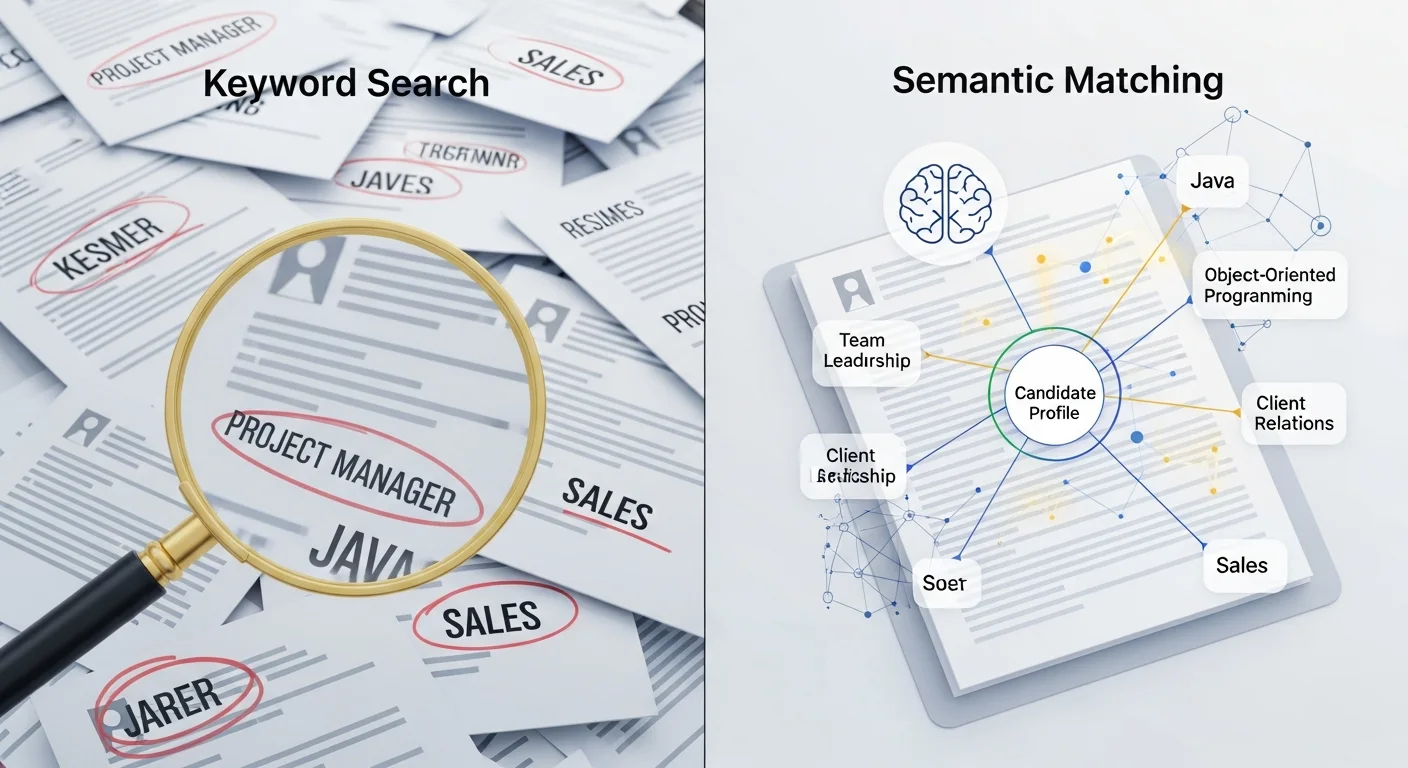
The most critical metric is false negatives. In high-volume hiring, you are inevitably rejecting thousands of people. The hidden cost for an enterprise is rejecting the next superstar because they didn't match a keyword. You should measure the "resurrection rate": how often does the AI identify a candidate that a human or legacy ATS filter would have missed? AICRUIT specializes in this deep semantic analysis, finding the talent that traditional methods discard. Recovering these candidates improves the overall quality of the talent pool and maximizes the marketing spend you used to attract them in the first place.
Shortlist Diversity
Next, you must quantify shortlist diversity. Most enterprises have public DEI goals. You need to measure the demographic composition of the funnel at the "Apply" stage versus the "Interview" stage. If there is a significant drop-off of underrepresented groups during screening, you have a bias problem. AI ROI is demonstrated by flattening this drop-off. If the AI screening maintains the diversity ratio from application to shortlist better than human review, you have a quantifiable win for your diversity objectives.
Screening Consistency
Finally, track screening consistency. This can be measured by auditing the alignment between candidate scores and hiring manager satisfaction across different regions or departments. If the AI-ranked candidates in Engineering are performing just as well as AI-ranked candidates in Sales, you have achieved a unified standard of quality. This recruiting ROI by company size metric proves that you have successfully operationalized quality control across a sprawling organization.
These metrics align closely with false negatives in hiring analysis, where early-stage decisions are treated as cost drivers rather than operational details.
Why Enterprise ROI Takes Longer to Materialize
One of the most common misunderstandings in enterprise hiring is the timeline. Leaders often expect immediate ROI signals similar to those seen in smaller teams. In reality, enterprise ROI takes longer to appear, and that delay is normal.
Metric stabilization timelines differ because the law of large numbers is at play. In an enterprise, a pilot program usually runs in one department first. You gather data, tweak the calibration, and then expand. You cannot declare victory based on one week of data because seasonal hiring spikes or specific project needs can skew the numbers. You need a full quarter or two to see the trend line separate from the noise.
Additionally, volume effects on measurement mean that the savings compound slowly. Saving ten seconds on one resume is negligible. Saving ten seconds on a million resumes is transformative. But you have to wait for the million resumes to flow through to calculate that total impact. The "Governance" and "Risk" ROI also take time to prove; you only know you have reduced legal risk after a year of not being sued or auditing clean results.
Understanding this timeline prevents premature conclusions and unrealistic expectations. ROI in large organizations is measured in stability and risk reduction before it is measured in speed or cost.
Aligning ROI Measurement with Company Size
The most effective recruiting leaders do not ask whether AI delivers ROI. They ask where ROI should appear based on their scale. For SMBs, the playbook focuses on speed, workload relief, and cost visibility. For enterprises, it emphasizes consistency, defensibility, and long-term risk control.
AI recruiting platforms like AICRUIT support both models by adapting to context rather than enforcing a single definition of success. The value is not in identical outcomes, but in scale-appropriate measurement. When SMBs measure ROI through efficiency, and enterprises measure it through stability, the same technology delivers different but equally valid wins.
Organizations that anchor their approach in AI recruiting ROI frameworks are better equipped to set expectations, select metrics, and evaluate outcomes without confusion.
Conclusion
The return on investment (ROI) for AI recruiting depends on how organizations change, not just on technology. Company size affects their goals, schedules, and what success looks like.
SMB ROI centers on speed, recruiter leverage, and cash impact. Enterprise ROI centers on consistency, defensibility, and variance reduction. Even though they use similar technology, their stories differ. Both groups want to find the best talent, but what a "win" means varies based on the organization's context.
By matching your goals with your situation, you can focus on speed for small businesses and consistency for large ones. This approach turns AI recruiting ROI from a trendy term into a key figure that no CFO would want to cut. Whether you're an SMB or an Enterprise, the goal is the same: to attract better talent; you just need the right tools to guide you.

%20(1).webp)